Plugged In or Left Behind? The Real Obstacles Slowing Electric Heavy Equipment Adoption Across American Industry
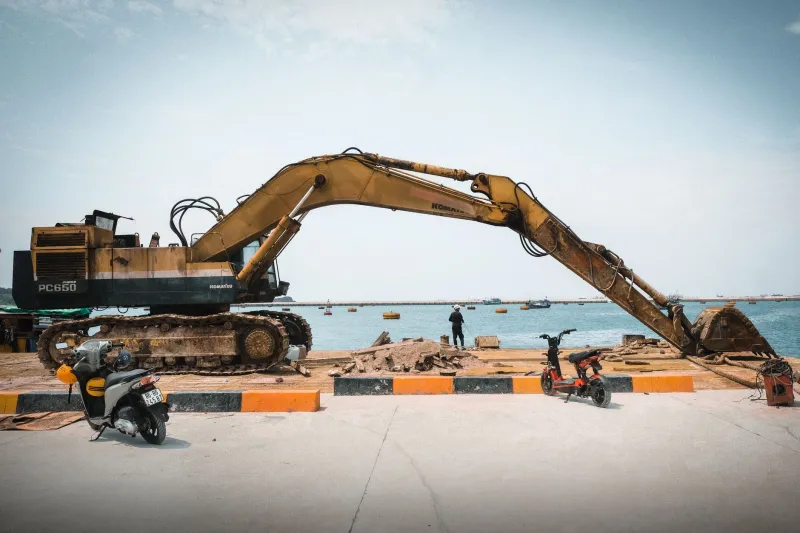
The conversation around electric heavy equipment has grown louder with each passing trade show and policy announcement. Manufacturers from Caterpillar to Komatsu have unveiled battery-electric prototypes, and federal incentive programs have put real dollars behind the push toward electrification. Yet on job sites and factory floors across the United States, diesel engines continue to dominate. The reasons are more nuanced than critics of the industry often acknowledge.
For American industrial buyers—whether they operate quarries in Appalachia, distribution centers in the Midwest, or construction fleets across the Sun Belt—the decision to transition away from proven diesel-powered equipment is not primarily a philosophical one. It is an operational and financial calculation, and right now, that calculation is not resolving in favor of electric in most use cases.
Battery Technology: The Performance Gap That Won't Close Quietly
The most fundamental barrier to widespread adoption is not cost—it is energy density. Current lithium-ion battery technology simply cannot replicate the sustained output that diesel engines deliver across long, demanding shifts. A mid-size electric excavator operating in a high-cycle application may exhaust its charge in four to six hours under real-world conditions. For operations running two or three shifts, that limitation is not a minor inconvenience; it is a fundamental workflow disruption.
Recharging times compound the problem. Even with fast-charging infrastructure in place, bringing a depleted battery pack back to operational capacity takes significantly longer than refueling a diesel machine. In environments where every productive hour carries measurable financial weight, extended downtime for charging is difficult to justify—particularly when diesel alternatives remain available and familiar.
Cold weather performance introduces another variable that is especially relevant for industrial operations in the northern United States and mountain West. Lithium-ion batteries lose meaningful capacity in sustained low temperatures, reducing range and power output precisely when equipment is expected to perform reliably under demanding conditions.
Infrastructure: The Hidden Capital Requirement
Purchasing an electric machine is only the beginning of the investment conversation. Deploying that machine effectively requires electrical infrastructure capable of supporting high-demand charging systems—often 480-volt three-phase power at significant amperage. For operations housed in older industrial facilities, or for contractors working across multiple job sites, the cost of upgrading or installing that infrastructure can rival or exceed the premium paid for the electric equipment itself.
Utility coordination adds another layer of complexity. Bringing additional electrical capacity to an industrial site frequently involves long lead times for utility upgrades, permitting processes, and in some cases, interconnection agreements that can take months to finalize. For buyers accustomed to the relative simplicity of adding a diesel machine to an existing fleet, the infrastructure burden associated with electrification represents a genuine operational obstacle rather than a theoretical concern.
Regulatory Ambiguity and Incentive Uncertainty
Federal and state-level incentives have made electric equipment more financially accessible in certain contexts, but the regulatory landscape remains inconsistent and, in some cases, contradictory. Tax credits and grant programs vary significantly by state, equipment class, and application type. The rules governing which machines qualify, under what conditions, and for how long have shifted with successive legislative cycles, making long-term financial planning difficult for buyers who need certainty when committing capital.
Emissions regulations present a related challenge. Some states—California most prominently—have moved aggressively toward mandating zero-emission equipment in specific sectors and timelines. Others have adopted a wait-and-see posture. For national operators managing fleets across multiple regulatory jurisdictions, the lack of a unified federal framework creates compliance complexity that diesel-centric operations currently avoid.
The Proven Workflow Problem
Perhaps the most underappreciated obstacle to electrification is institutional inertia—not in the pejorative sense, but in the practical sense. Industrial operations are built around established workflows: maintenance schedules, operator training programs, parts procurement relationships, and service networks that have been refined over decades of diesel operation.
Electric heavy equipment demands new expertise at every level. Technicians accustomed to diesel systems require retraining to safely service high-voltage battery packs and electric drivetrains. Parts supply chains for electric components are thinner and less mature than those supporting diesel equipment. Service networks capable of diagnosing and repairing advanced battery management systems are still developing across much of the country.
For a fleet manager weighing the transition, the question is not merely whether electric equipment performs adequately—it is whether the surrounding ecosystem of support, parts, and expertise is mature enough to sustain operations when something goes wrong. In many regions and many applications, that ecosystem is not yet in place.
Where Early Adopters Are Finding Advantage
None of this is to suggest that electrification has no present-day merit. A growing number of American industrial operators have identified specific applications where electric equipment delivers genuine competitive advantages, and their early experience is instructive.
Indoor applications—warehouse operations, underground mining, and enclosed manufacturing environments—represent the clearest near-term opportunity. The elimination of exhaust emissions in confined spaces improves air quality, reduces ventilation requirements, and in some cases enables compliance with regulations that would otherwise require expensive engineering controls. Electric forklifts have achieved broad adoption in these settings for precisely these reasons, and the logic is beginning to extend to heavier equipment categories.
Operations with predictable duty cycles and consistent access to charging infrastructure are also finding electric equipment viable. A construction contractor performing repetitive earthwork on a long-term project at a single location—where a charging station can be permanently installed—faces fewer of the infrastructure and range challenges that complicate fleet-wide electrification.
Fuel cost savings, where charging rates are favorable and diesel prices are elevated, have delivered measurable financial returns for some early adopters. Reduced maintenance costs—electric drivetrains have fewer moving parts and require less routine servicing than diesel engines—have also contributed to positive total cost of ownership calculations in specific operating environments.
What Industry Leaders Are Projecting
The consensus among equipment manufacturers and industry analysts is that electric heavy equipment will achieve meaningful market penetration within the next decade, but that the transition will be uneven and application-specific rather than universal. Battery energy density is expected to improve, charging times are projected to decrease, and infrastructure investment—driven by both public policy and private capital—will gradually expand the range of viable use cases.
For American industrial buyers, the practical implication is that electrification warrants serious evaluation rather than reflexive adoption or reflexive dismissal. The question is not whether to engage with electric equipment, but when, in which applications, and under what conditions the investment makes operational and financial sense.
Organizations that begin developing internal expertise now—through pilot programs, targeted deployments, and technician training—will be better positioned to scale adoption as the technology matures. Those that wait for a fully mature ecosystem before engaging risk finding themselves behind competitors who have already navigated the learning curve.
The electrification of heavy equipment is not a question of if. For most American industrial operations, the honest answer is still when—and that distinction matters enormously for the capital decisions being made today.