New Iron or Second-Hand Steel? A Practical Decision Framework for Construction Equipment Buyers
Few decisions carry more financial weight in the construction industry than the choice between purchasing new equipment and investing in refurbished or used machinery. It is a question that touches on capital allocation, operational risk, tax strategy, and long-term fleet planning — and there is rarely a single correct answer that applies universally.
What experienced equipment managers know is that the right choice depends on a careful evaluation of several interconnected variables. The following framework is designed to help construction company owners, project managers, and procurement directors work through that evaluation systematically — and arrive at a decision grounded in data rather than habit or assumption.
Step 1: Define the Role the Equipment Will Play
Before comparing price tags, it is essential to clarify how the machine will be used. Ask the following questions:
- How frequently will this equipment operate? A machine running 2,000+ hours per year in a high-utilization environment has very different cost dynamics than one used seasonally on a handful of projects.
- How critical is it to project timelines? If the equipment is central to a project's critical path, reliability becomes a premium concern.
- Is this a long-term fleet addition or a project-specific need? Short-term needs may favor rental or used equipment; long-term integration into core operations may justify a new purchase.
Answering these questions honestly will shape every subsequent comparison.
Step 2: Calculate Total Cost of Ownership — Not Just Purchase Price
The sticker price of a piece of equipment is the least complete number in the buying decision. Total cost of ownership (TCO) includes:
- Acquisition cost (purchase price or financing terms)
- Fuel and operating costs (newer machines often deliver measurable efficiency gains)
- Scheduled maintenance expenses
- Unplanned repair frequency and parts costs
- Operator training requirements
- Resale or residual value at end of useful life
- Insurance and registration costs
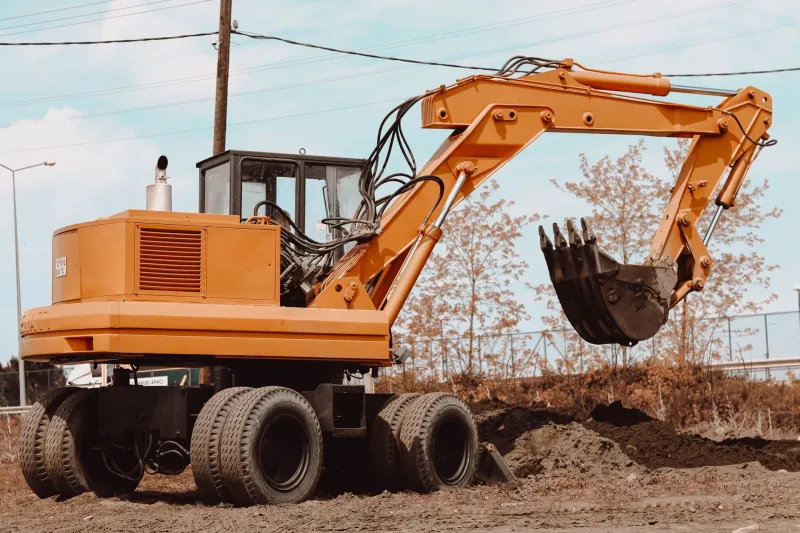
For a new excavator, for example, the higher upfront cost may be partially offset by lower fuel consumption due to Tier 4 Final engine compliance, reduced maintenance frequency during the warranty period, and a stronger resale market after five years. A comparable used unit purchased at 40% of the new price may carry higher operating costs, more frequent parts expenditures, and a narrower resale window — but the lower entry cost could free capital for other investments.
Running a five-year TCO comparison for each option, using realistic assumptions about utilization rates and maintenance history, is the most reliable way to make an apples-to-apples evaluation.
Step 3: Understand What the Warranty Actually Covers
Warranty coverage is one of the most significant differentiators between new and used equipment, and it deserves careful scrutiny rather than a surface-level comparison.
New equipment warranties typically cover major components — engine, drivetrain, hydraulics — for a defined period or operating hours. Some manufacturers offer extended warranty packages that provide additional protection. During the warranty period, unexpected repair costs are largely absorbed by the manufacturer, which meaningfully reduces financial risk.
Used equipment warranties, when available, vary considerably in scope. A certified pre-owned machine purchased through a reputable dealer may carry a limited powertrain warranty; equipment purchased at auction typically transfers with no warranty at all. The absence of warranty coverage does not automatically disqualify a used purchase, but it does require the buyer to price in a higher maintenance reserve and conduct thorough pre-purchase inspection.
For high-utilization applications where a breakdown could cost tens of thousands of dollars in project delays, the warranty protection offered by new equipment may justify a premium that appears significant on paper but is modest relative to the downtime risk it mitigates.
Step 4: Evaluate the Machine's Maintenance and Inspection History
When considering used equipment, the quality of available documentation is a critical signal of the machine's true condition. A well-maintained unit with complete service records, documented repairs, and consistent oil analysis results is a fundamentally different proposition than a machine whose history is unknown or inconsistent.
Key inspection points for used heavy equipment include:
- Engine hours and hour meter accuracy
- Hydraulic system condition (look for leaks, sluggish response, unusual noise)
- Undercarriage wear (particularly relevant for tracked equipment such as excavators and dozers)
- Structural integrity (cracks, welds, bent components)
- Electrical system function
- Cab condition and operator controls
Engaging an independent equipment inspector before finalizing a used purchase is a worthwhile investment, particularly for high-value machinery. The cost of a professional inspection is negligible relative to the risk of acquiring a machine with concealed mechanical problems.
Step 5: Factor in Financing, Tax Treatment, and Cash Flow
The financial structure of an equipment purchase can significantly influence which option makes more sense for a given company.
Section 179 deductions and bonus depreciation under U.S. tax law allow businesses to deduct a substantial portion of the cost of qualifying equipment in the year of purchase, which can improve the after-tax economics of a new equipment investment considerably. Consulting with a tax advisor before finalizing a major equipment purchase is advisable for any construction firm.
From a cash flow perspective, used equipment's lower acquisition cost preserves working capital that may be needed for payroll, materials, or project bonding. Conversely, new equipment financed through manufacturer programs often carries competitive interest rates and structured payment schedules that make the higher purchase price manageable within an operating budget.
Step 6: Consider Parts Availability and Long-Term Supportability
One factor that is frequently overlooked in the new-versus-used analysis is the long-term availability of parts and service support for the specific make and model under consideration.
For newer equipment, OEM parts availability is generally strong, and dealer service networks are accessible. For older used machinery — particularly models that have been discontinued or are less common in the U.S. market — sourcing replacement components can become a genuine challenge as the machine ages.
This is an area where working with an experienced equipment and parts distributor provides real value. A supplier with broad inventory access across multiple equipment categories and brands can often source components for older machinery that would otherwise require lengthy lead times or expensive custom fabrication.
Making the Call: A Summary Checklist
Before finalizing any equipment purchasing decision, work through the following checklist:
- Have I calculated five-year TCO for both new and used options?
- Does the planned utilization rate justify the new equipment premium?
- Is warranty coverage a critical risk mitigation factor for this application?
- Has the used equipment been professionally inspected?
- Are parts and service support readily available for this make and model?
- Have I consulted a tax advisor regarding depreciation benefits?
- Does the financing structure align with my cash flow requirements?
- What is the realistic resale value of each option at end of use?
There is no universal answer to the new-versus-used question — but there is always a better-informed one. At New India Machinery, we work with construction and manufacturing companies across the United States to source both new and refurbished heavy equipment, along with the parts and support needed to keep fleets operating at peak efficiency. Our goal is to help you make the right decision for your operation, not simply the most convenient one.