Connected Iron: How Telematics and Real-Time Monitoring Are Rewriting the Economics of Heavy Equipment Fleets
For decades, heavy equipment management in American manufacturing and construction operated on a familiar rhythm: run the machine, watch for warning signs, schedule periodic service, and hope that nothing catastrophic interrupted production. That rhythm is now being disrupted by a convergence of affordable sensors, cellular connectivity, and cloud-based analytics platforms that collectively fall under the label of telematics. The question for industrial buyers is no longer whether this technology is real — it demonstrably is — but whether the economics justify adoption and, if so, how to pursue implementation without absorbing unnecessary cost or complexity.
What Telematics Actually Delivers on the Shop Floor
At its most fundamental level, a telematics system places sensors on critical equipment components — engines, hydraulic circuits, transmission systems, undercarriage assemblies — and transmits operational data continuously to a centralized platform accessible by fleet managers, maintenance supervisors, and procurement teams. The data streams typically include engine hours, fuel consumption rates, idle time ratios, fluid temperatures, pressure readings, fault codes, and GPS location.
The immediate operational benefit is visibility. Fleet managers at large construction contractors and manufacturing facilities have historically lacked reliable information about how their equipment is actually being used between scheduled service intervals. A 300-ton mining shovel or a heavy-duty overhead crane might accumulate significant stress cycles that never appear in a maintenance logbook. Telematics closes that information gap, providing a continuous record that supports more accurate service scheduling and component life projections.
The more consequential benefit, however, is predictive maintenance capability. When sensor data is analyzed against historical failure patterns — either through proprietary OEM algorithms or third-party analytics platforms — fleet managers receive early warnings about developing faults before those faults become breakdowns. Bearing temperature anomalies, hydraulic pressure deviations, and abnormal vibration signatures can each signal a component approaching failure. Acting on that signal proactively costs a fraction of what an unplanned breakdown costs in parts, labor, and lost production time.
Running the Numbers: What ROI Actually Looks Like
The financial case for telematics investment is strongest in operations where equipment downtime carries a high daily cost. In U.S. manufacturing environments where a single production line depends on continuous equipment availability, unplanned stoppages can easily cost tens of thousands of dollars per day when lost output, labor inefficiency, and expedited parts sourcing are all factored in. Against that baseline, a telematics platform priced at several hundred dollars per machine per year — a common entry-level price point for mid-tier systems — represents a straightforward value proposition if it prevents even a single major unplanned failure annually.
Fleet utilization data adds another dimension to the ROI calculation. Idle time analysis routinely reveals that significant percentages of fleet hours — industry surveys frequently cite figures between 30 and 40 percent — are accumulated with equipment running but not performing productive work. Reducing unnecessary idling lowers fuel expenditure directly and extends engine life by reducing wear cycles unassociated with revenue-generating activity. For large fleets operating diesel equipment, the fuel savings alone can justify telematics investment within a single operating season.
There is also a procurement argument. Equipment utilization data informs fleet right-sizing decisions, helping operations identify underutilized assets that can be redeployed, sold, or not replaced at end of life. An operation running 40 machines when accurate utilization data suggests 34 would suffice is carrying significant unnecessary capital on its books.
Which Equipment Categories Are Adopting Fastest
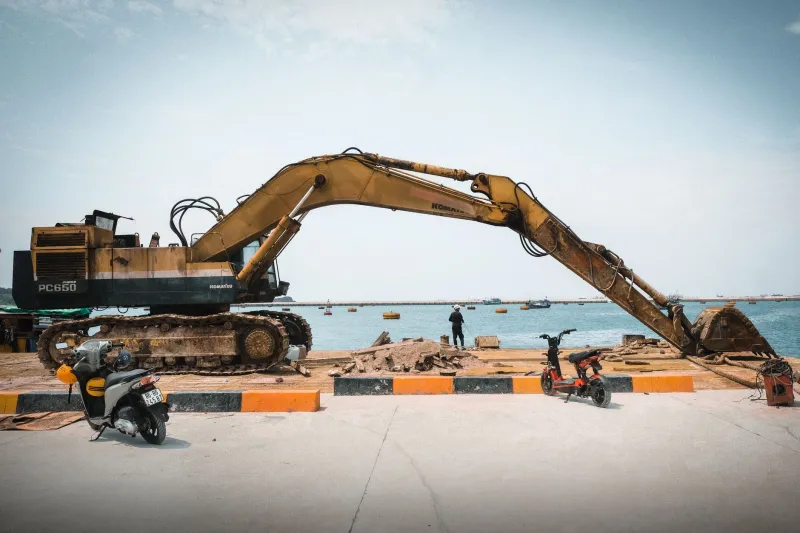
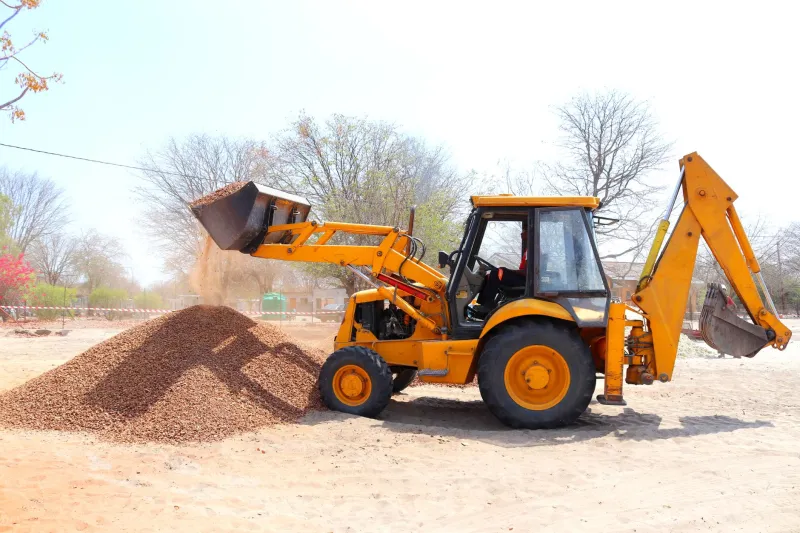
Telematics adoption is not uniform across heavy equipment categories. The fastest adoption rates in the United States are occurring in earthmoving and construction equipment — excavators, wheel loaders, motor graders, and articulated dump trucks — driven in part by OEM integration. Major manufacturers have embedded telematics hardware into new production models as standard equipment, effectively eliminating the adoption decision for buyers of new iron. Fleet managers at large civil construction contractors now routinely manage telematics dashboards as a standard operational tool rather than a technology experiment.
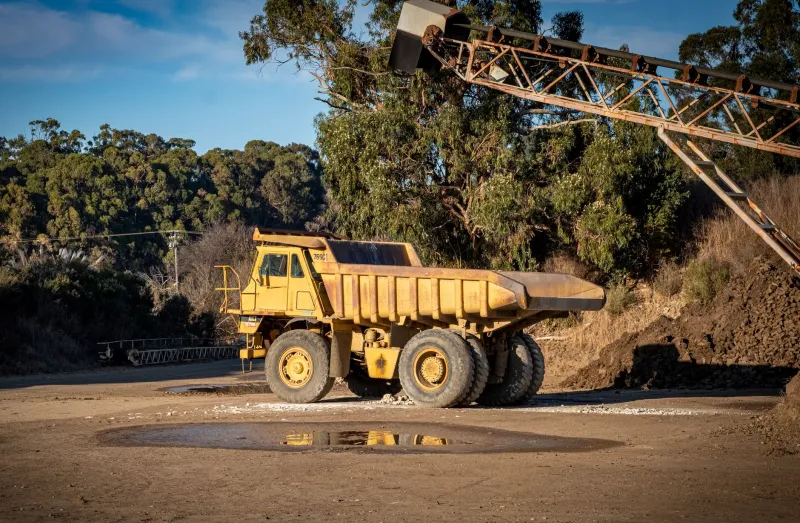
Mining equipment represents another high-adoption category, where the cost consequences of downtime are extreme and the operating environments are remote enough to make manual inspection impractical. Haul trucks, draglines, and continuous miners at U.S. mining operations have carried sophisticated monitoring systems for years, and those platforms have grown considerably more capable as data processing costs have declined.
Manufacturing environments — including overhead cranes, forklifts, and CNC machining centers — are adopting more gradually, partly because the equipment ecosystem is more fragmented and partly because legacy machinery lacks native sensor integration. Retrofitting older equipment with third-party telematics hardware is technically feasible but introduces integration complexity that some operations have been slow to address.
The Barriers That Remain Real
Despite the compelling economics, implementation barriers are genuine and should not be minimized. Data integration is perhaps the most persistent challenge. Large industrial operations typically run equipment from multiple manufacturers, each with proprietary telematics platforms that do not communicate natively with one another. A fleet manager overseeing equipment from three or four different OEMs may find themselves toggling between multiple dashboards rather than working from a unified operational picture. Third-party telematics aggregation platforms exist to address this problem, but they introduce their own licensing costs and integration effort.
Data quality and alert fatigue present a related challenge. Telematics systems configured without careful calibration can generate high volumes of notifications, many of which do not represent actionable maintenance needs. Maintenance teams that receive excessive alerts quickly learn to discount them, which defeats the predictive purpose of the technology entirely. Effective implementation requires investment in platform configuration and, frequently, in training maintenance personnel to interpret sensor data accurately.
Cybersecurity is an emerging concern that deserves mention. Equipment connected to cellular networks and cloud platforms represents a potential attack surface that industrial operations have not historically needed to manage. As telematics adoption grows, so does the importance of ensuring that platform vendors maintain rigorous security standards.
Building a Sensible Adoption Strategy
For operations evaluating telematics investment, a phased approach generally outperforms a wholesale fleet-wide deployment. Beginning with the highest-value or highest-risk equipment — machines whose downtime carries the greatest financial consequence — allows an operation to develop internal competency with the technology, validate ROI assumptions against actual results, and build organizational confidence before extending the program.
Platform selection should prioritize interoperability. Buyers who anticipate running mixed-OEM fleets should evaluate telematics vendors on their ability to ingest data from multiple equipment sources and present it through a single interface. The marginal cost of a more capable platform is almost always justified by the reduction in operational complexity.
Finally, telematics data is only as valuable as the maintenance processes built around it. Organizations that invest in sensor infrastructure without simultaneously reviewing their maintenance workflows and parts stocking strategies will capture only a fraction of the available benefit. The technology is a tool; the strategy that surrounds it determines whether that tool delivers meaningful returns.