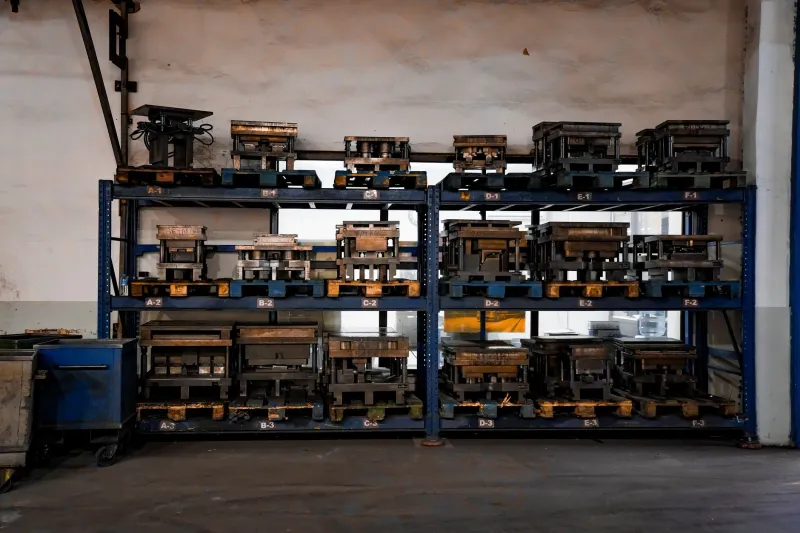
Lean to a Fault: How Just-In-Time Parts Strategies Are Leaving American Equipment Operators Exposed
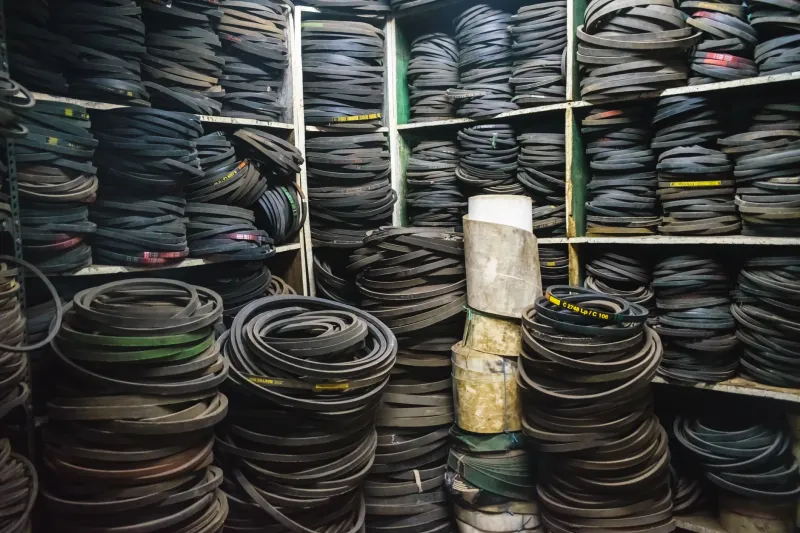
For much of the past three decades, just-in-time inventory management was treated less as a strategy and more as a self-evident truth. Order what you need, when you need it. Minimize warehouse footprint. Reduce carrying costs. Trust the supply chain to deliver. Across American manufacturing floors and construction jobsites, these principles were institutionalized into purchasing policies, ERP systems, and annual budget targets.
Then the supply chain broke — not once, but repeatedly — and the assumptions underlying just-in-time procurement began to look less like wisdom and more like wishful thinking.
Today, equipment operators across the United States are confronting an uncomfortable reality: the model optimized for a stable, globalized supply environment is poorly suited to one defined by port disruptions, raw material volatility, extended lead times, and geopolitical unpredictability. The cost of that mismatch is being measured not in spreadsheet line items, but in idle machines, missed contracts, and eroding customer relationships.
The Seductive Logic of Lean Procurement
The appeal of just-in-time parts ordering was never irrational. For large fleets operating in predictable cycles, carrying excess inventory represented real money tied up in shelving, climate-controlled storage, and administrative overhead. OEM delivery networks, particularly through the 1990s and 2000s, were reliable enough that operators could reasonably expect critical components to arrive within acceptable windows.
Distributors reinforced this behavior by maintaining robust regional stock. If a manufacturer's direct lead time stretched, a regional supplier could often bridge the gap. The system had redundancy built in — just not the redundancy that operators owned themselves.
What changed was the compounding fragility of the global supply network. When disruptions hit simultaneously at multiple points — raw material shortages, shipping backlogs, semiconductor deficits affecting machine control systems, labor gaps at distribution centers — the buffers that operators had outsourced to their supply chain partners evaporated. Regional distributors, themselves operating lean, had little surplus to offer.
When the Model Fails: The Real Costs Operators Are Absorbing
The financial exposure created by just-in-time failures is rarely captured accurately in post-mortem accounting. Direct costs — expedited freight, premium pricing for emergency sourcing, temporary equipment rentals — are visible. The indirect costs are harder to quantify but often larger.
Consider a mid-sized construction firm operating a mixed fleet of excavators and compact track loaders on a commercial site in the Southeast. A hydraulic pump failure on a primary excavator triggers a parts order. Under pre-pandemic assumptions, delivery would arrive within five to seven business days. In the current environment, that same part — sourced from an overseas manufacturer with consolidated U.S. distribution — carries a lead time of three to five weeks. The project timeline does not flex. Subcontractors downstream cannot be held without penalty clauses being triggered. The cost of the delay, inclusive of penalties, rental equipment, and crew reallocation, dwarfs the cost of maintaining a single spare pump in inventory.
Similar scenarios are playing out in manufacturing. A Midwest automotive components supplier operating precision CNC equipment experienced a spindle bearing failure that halted a critical production line for eleven days — not because the part was rare, but because their just-in-time policy had eliminated all safety stock for components classified as low-failure-probability. The classification was statistically defensible. The outcome was operationally catastrophic.
These are not anomalies. They represent a structural vulnerability that operators who have not revisited their procurement assumptions are continuing to carry.
Why Supply Chain Volatility Is Not a Temporary Condition
Some purchasing managers have treated recent disruptions as a temporary aberration — a post-pandemic correction that will normalize once global logistics stabilize. That framing is increasingly difficult to defend.
Near-shoring and reshoring initiatives, while positive for long-term domestic supply resilience, are creating their own transitional turbulence as production capacity shifts. Trade policy uncertainty continues to affect component pricing and availability, particularly for parts with significant content sourced from Asia. Climate-related logistics disruptions — affecting ports, rail lines, and regional road infrastructure — are becoming more frequent rather than less. And labor shortages within the freight and warehousing sectors show no signs of rapid resolution.
Operators who wait for the environment to return to a pre-2020 baseline before adjusting their procurement strategies are, in effect, accepting ongoing exposure as policy.
Recalibrating Without Overcorrecting: A Practical Framework
The answer is not to abandon lean principles wholesale and revert to the bloated inventory practices of an earlier era. Excess inventory carries its own costs, and not every part warrants the same stockpiling logic. The goal is a more intelligent segmentation of the parts universe — one that applies different procurement strategies to different categories of risk.
Criticality-based stratification is the starting point. Operators should systematically classify parts according to two axes: the operational impact of a failure event and the current market lead time for the component. Parts that score high on both dimensions — long lead times combined with high downtime impact — are candidates for on-hand safety stock, regardless of historical failure rates. Statistical probability is not a substitute for consequence analysis.
Supplier diversification reduces single-source dependency for high-criticality components. Establishing relationships with multiple qualified suppliers — including domestic alternatives where they exist — creates optionality when a primary source is disrupted. This requires upfront investment in qualification and relationship management, but the operational insurance it provides justifies the effort.
Vendor-managed inventory programs, offered by select distributors, represent a middle path that preserves some lean discipline while shifting inventory burden to a supply chain partner with greater aggregation capacity. Under these arrangements, a distributor maintains dedicated stock allocated to a specific operator's fleet, reducing the operator's carrying costs while guaranteeing availability. Not all distributors offer this model, and terms vary considerably, but for high-volume operators it merits serious evaluation.
Predictive maintenance integration is the longer-horizon investment that reduces the frequency of emergency parts demand. When condition monitoring systems can flag component degradation before failure occurs, operators gain the planning window needed to source parts through standard channels rather than emergency procurement. The economics of telematics and predictive diagnostics look considerably more favorable when viewed against the total cost of unplanned downtime.
Rethinking the Cost Calculus
The fundamental issue is that just-in-time procurement has historically been evaluated against a narrow cost model — one that captures inventory carrying costs accurately but assigns zero cost to supply chain risk. In a stable environment, that omission was tolerable. In the current environment, it is a material accounting error.
Operators who build a more complete cost model — one that incorporates expected downtime costs, probability-weighted delay scenarios, and the revenue impact of missed production or project commitments — often find that modest increases in safety stock for critical components deliver substantial returns. The math, done honestly, frequently favors resilience over leanness at the margin.
American industrial operators built their competitive positions on efficiency. Protecting that position now requires recognizing that supply chain resilience is not the enemy of efficiency — it is a prerequisite for sustaining it. The hidden cost of waiting, it turns out, has never been hidden at all. It has simply been unaccounted for.