When the Catalog Runs Dry: How American Manufacturers Are Engineering Their Way Past OEM Parts Obsolescence
The Moment the Catalog Goes Silent
For a plant maintenance manager, few situations are more immediately threatening than discovering that a critical replacement part no longer exists. The OEM has discontinued the line. The authorized distributor has nothing in stock. The lead time on a custom order — if the manufacturer will even entertain one — stretches into months. Meanwhile, the machine sits idle, and every hour of downtime chips away at production targets.
This scenario, once considered an edge case, has become a recurring reality across American manufacturing and construction. Equipment with a twenty- or thirty-year service life routinely outlasts the commercial interest of its original manufacturer in supporting that equipment. When OEM parts obsolescence strikes, operations face a binary choice: retire otherwise functional machinery or find another path to continued operation. Increasingly, a third option is gaining traction — engineering the solution internally or sourcing it through the growing ecosystem of specialized fabricators who have built businesses around exactly this problem.
Why Obsolescence Is Accelerating
Several forces are converging to make parts obsolescence a more frequent concern. Consolidation among major equipment manufacturers has led to product line rationalization, with legacy components among the first casualties. Supply chain disruptions over the past several years have prompted some OEMs to accelerate discontinuation timelines rather than maintain slow-moving inventory. And as digital and electronic systems have penetrated even traditional mechanical equipment, older analog and electromechanical components have faced obsolescence pressure from two directions simultaneously: declining demand and shrinking supplier bases.
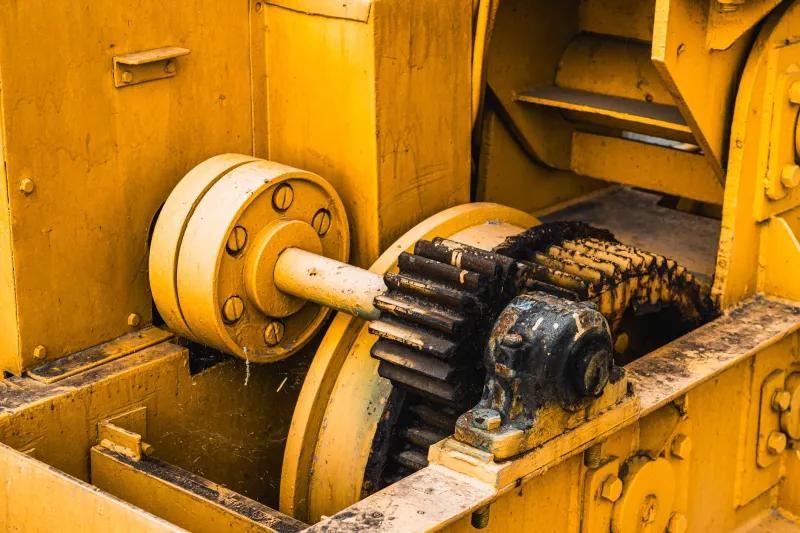
For heavy equipment operators in manufacturing and construction, the impact is sharpest on machinery that was built to last but was never designed with long-term parts availability in mind. Hydraulic control valves, custom gear assemblies, proprietary casting components, and legacy electrical panels represent categories where obsolescence frequently creates operational crises.
Reverse Engineering as a Legitimate Industrial Strategy
What was once considered an engineering workaround has matured into a recognized discipline. Reverse engineering — the systematic analysis of an existing component to produce accurate fabrication specifications — is now routinely employed by maintenance engineering teams at facilities that operate older capital equipment.
The process typically begins with dimensional analysis. Skilled metrology technicians use coordinate measuring machines, 3D laser scanners, and traditional precision instruments to capture the exact geometry of a worn or intact component. Material composition is determined through spectrographic analysis, hardness testing, and, where relevant, metallurgical examination of grain structure and heat treatment characteristics. Tolerances are established not merely from the physical part but from the broader mechanical context — how the component interfaces with adjacent parts, what loads it bears, and what failure modes it must resist.
From this foundation, engineering teams or contracted machine shops produce technical drawings sufficient to guide fabrication. In some cases, the result is a component that is dimensionally identical to the original. In others, the process becomes an opportunity to address known weaknesses in the original design — a practice sometimes called "improvement engineering" that can yield a part with superior service life to the discontinued OEM component it replaces.
A mid-sized steel processing facility in the Ohio Valley, operating a fleet of rolling mill equipment that dates to the 1980s, has pursued this approach systematically. After finding that three critical drive components had been discontinued by the original manufacturer, the facility's engineering department partnered with a regional machine shop to reverse-engineer and fabricate replacements. The resulting parts, produced from updated alloy specifications, have outperformed the original components in service life by a measurable margin — an outcome the facility's maintenance director attributes to the use of modern materials that were not commercially available when the equipment was first designed.
The Boutique Machine Shop Ecosystem
Not every industrial operation has the internal engineering capacity to lead a reverse engineering effort. For many, the more practical path runs through a category of supplier that has grown significantly in recent years: the boutique machine shop specializing in obsolete and discontinued industrial components.
These operations — often small to mid-sized, regionally concentrated in manufacturing-heavy states, and built around highly skilled machinists with deep experience in legacy equipment — have positioned themselves as a critical bridge between discontinued OEM catalogs and continued equipment operation. Their competitive advantage lies not in scale but in expertise: the ability to interpret worn or damaged parts, consult with equipment operators about operational context, and produce components that function reliably in demanding industrial environments.
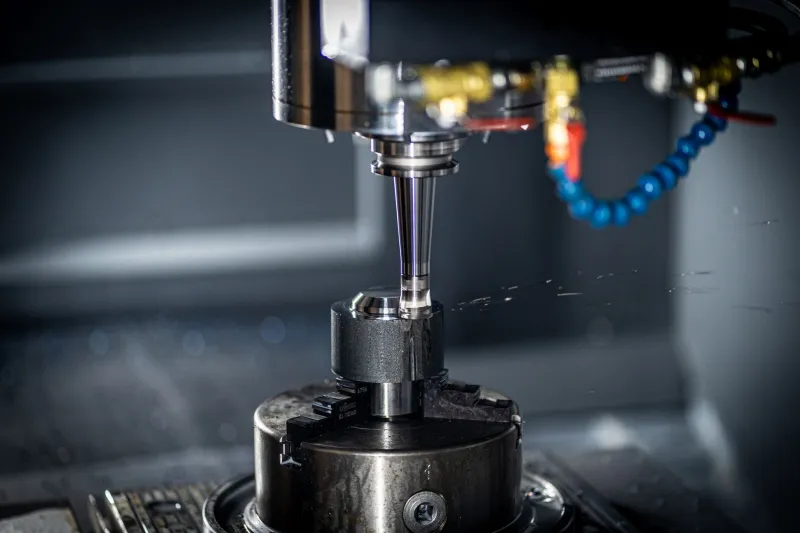
Some of these shops have developed proprietary databases of technical documentation for discontinued equipment lines, accumulated over decades of work on legacy machinery. Others maintain relationships with metallurgical laboratories and heat treatment facilities that allow them to match the material specifications of original components with precision. A number have invested in advanced CNC machining centers and additive manufacturing capabilities that expand the range of geometries they can produce economically.
For equipment operators, finding the right fabricator is itself a skill. Vetting a machine shop for this type of work requires attention to quality management systems, the availability of material certifications, metrology capabilities, and demonstrated experience with comparable components. Price should be a secondary consideration — the cost of a failed fabricated part in a critical application typically dwarfs any savings achieved by selecting a less qualified supplier.
Legal and Regulatory Considerations
Reverse engineering and in-house fabrication of replacement components exists within a legal framework that operators must understand before proceeding. Intellectual property considerations vary significantly depending on the component, the OEM's current status, and whether relevant patents remain active. In many cases involving older equipment, patents have long since expired, and no meaningful IP barrier exists. In others, particularly where proprietary designs remain commercially active, the legal picture is more complex.
From a regulatory standpoint, fabricated replacement parts used in pressure-bearing systems, structural applications, or safety-critical functions may be subject to requirements under ASME standards, OSHA regulations, or industry-specific codes. Operations in sectors such as petrochemical processing or aerospace-adjacent manufacturing face particularly rigorous documentation requirements for non-OEM components. Engaging a qualified engineer to review and certify fabricated components is not merely a best practice in these contexts — it is often a regulatory obligation.
Insurance implications also warrant attention. Some commercial property and liability policies contain provisions that affect coverage when non-OEM components are used in equipment repair. A conversation with the facility's insurance carrier before embarking on a significant fabrication program is a prudent step that is frequently overlooked.
Building a Sustainable Approach
For operations that expect to rely on fabricated components over the long term, a systematic approach yields better outcomes than reactive, crisis-driven sourcing. Proactive identification of components at obsolescence risk — based on equipment age, OEM product line activity, and historical parts consumption — allows engineering teams to develop fabrication specifications before a failure event creates time pressure.
Maintaining detailed records of successful fabrications, including material certifications, dimensional inspection reports, and service performance data, builds an institutional knowledge base that accelerates future efforts. Establishing ongoing relationships with qualified machine shops, rather than sourcing each project on the spot market, enables those suppliers to develop familiarity with an operation's equipment and standards.
The broader lesson from facilities that have navigated OEM obsolescence successfully is that parts availability need not define the upper limit of equipment service life. With the right engineering discipline, supplier relationships, and regulatory awareness, American manufacturers have more options than the catalog suggests.