When the Machine Says No: Confronting Payload Limits on America's Aging Heavy Equipment Fleet
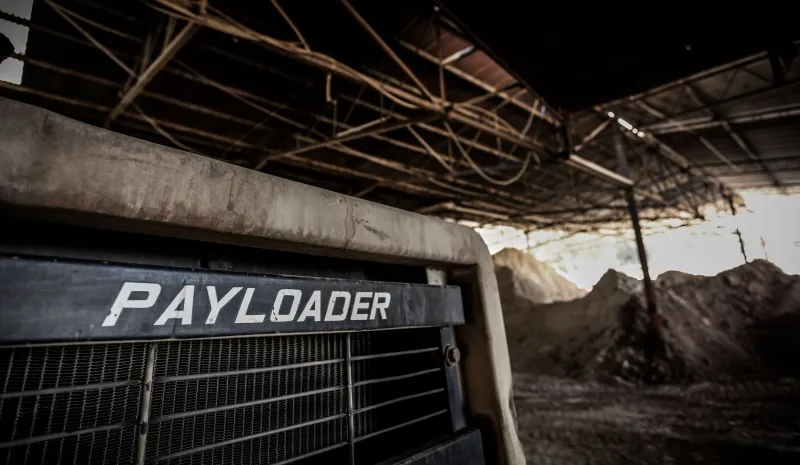
There is a particular kind of operational pressure that builds slowly, almost invisibly, until one morning a fleet manager stares at a utilization report and realizes the numbers no longer add up. Loads are heavier. Cycles are faster. And the equipment doing the work was engineered for a world that existed thirty years ago.
Across industrial sectors — from aggregate quarrying in the Appalachian foothills to port logistics operations along the Gulf Coast — American equipment operators are colliding with a structural reality: the payload thresholds built into aging machinery are increasingly incompatible with the weight and volume demands of modern production. The consequences range from accelerated mechanical wear to catastrophic structural failure, and the financial exposure in between is substantial.
The Engineering Gap Between Then and Now
Heavy equipment manufactured in the 1980s and 1990s was designed to meet the production benchmarks of its era. A rigid-frame haul truck rated at 100 tons was built to operate reliably within that envelope — not at 115 tons because a site supervisor needed to hit quarterly tonnage targets. Frame rails, axle assemblies, and hydraulic lift cylinders were sized with specific safety margins, and those margins were never intended to absorb the compounding stress of systematic overloading.
The problem is not that the equipment was poorly built. Much of it was exceptionally well-constructed. The problem is that production demands have outpaced design assumptions, and the machines have aged while the workloads have not.
Modern extraction and materials handling operations routinely process larger material volumes per shift than their predecessors. Advances in blasting technology, bucket design, and loading efficiency mean that equipment is presented with heavier payloads more frequently — even when operators believe they are running within rated limits. In many cases, they are not.
What Overloading Actually Costs
The financial damage from operating heavy equipment beyond design specifications rarely announces itself with a single dramatic failure. More often, it accumulates quietly across multiple cost centers before becoming impossible to ignore.
Consider the structural fatigue cycle. Frame cracks on haul trucks and excavators operating above rated payload thresholds tend to initiate at stress concentration points — weld joints, mounting brackets, and cross-member intersections — long before they become visible during routine inspection. By the time a crack is caught, the surrounding metal has typically been compromised well beyond the crack itself. Repair costs that might have been measured in thousands of dollars become six-figure structural rebuilds.
Drivetrain degradation follows a similar pattern. Transmission components, final drives, and differential assemblies operating under chronic overload conditions wear at accelerated rates that standard maintenance intervals fail to capture. Operators running these machines on OEM-recommended service schedules are, in effect, under-servicing equipment that is working significantly harder than the schedule was designed to address.
Then there is the liability dimension. When aging equipment operating above rated capacity contributes to an incident — a structural failure, a tip-over event, a load drop — the legal and regulatory exposure for the operating company is materially different than it would be for equipment operating within specification. OSHA documentation requirements and manufacturer service records become central exhibits in proceedings that can dwarf the cost of any equipment decision that preceded them.
Predictive Load Analysis: Making the Decision Before the Machine Does
The most sophisticated industrial operators are no longer waiting for visible symptoms before evaluating their aging equipment's capacity position. Predictive load analysis — the systematic collection and interpretation of real-world payload data against original design specifications — is reshaping how fleet decisions get made.
At a mid-scale construction materials producer in the Midwest, fleet managers began integrating onboard payload monitoring systems across their articulated haul truck fleet several years ago. The data was instructive in ways that gut-feel assessments had obscured. Certain machines were routinely receiving loads 12 to 18 percent above their rated capacity — not because operators were being reckless, but because loading efficiency had improved while payload awareness had not kept pace. The monitoring data allowed the company to quantify cumulative overload exposure across the fleet, prioritize structural inspections on the highest-exposure units, and build a capital replacement schedule grounded in actual wear data rather than calendar age alone.
This approach — sometimes called lifecycle load profiling — is increasingly available through third-party fleet analysis firms as well as through the telematics platforms offered by major equipment manufacturers. For operators working with older machines that predate integrated monitoring systems, aftermarket load sensors and GPS-linked payload tracking can provide comparable data at a fraction of the cost of new equipment.
The value of this data is most apparent when it is used to inform the retrofit-versus-replace calculation directly. A machine with 15,000 hours and a documented history of systematic overloading presents a fundamentally different replacement case than an identical unit that has operated within specification throughout its service life. Load profiling makes that distinction quantifiable.
Retrofit Realities: What the Numbers Actually Support
Not every aging machine facing payload pressure is a candidate for replacement. Capital budgets are constrained, lead times on new equipment remain extended across several categories, and in many applications, a well-executed structural retrofit can meaningfully extend a machine's productive life within appropriate operational parameters.
The critical discipline is ensuring that retrofit decisions are driven by engineering analysis rather than budget pressure alone. Reinforcing a frame rail or upgrading an axle assembly on a machine with latent structural fatigue does not eliminate the underlying risk — it relocates it. Independent structural assessments, conducted by qualified engineers with access to the machine's operational history and load data, are not optional extras in this process. They are the foundation on which any responsible retrofit decision must rest.
For machines where structural integrity can be confirmed and the primary limitation is a specific component — an undersized hydraulic system, an outmatched braking assembly, a worn suspension package — targeted upgrades can deliver genuine capacity improvements at costs well below new equipment acquisition. The aftermarket parts ecosystem serving American heavy equipment operators has matured considerably, and purpose-built capacity enhancement components are available for many of the most common aging platforms.
Where the structural analysis reveals cumulative fatigue damage that no targeted upgrade can adequately address, the replacement case becomes straightforward — even when the capital outlay is uncomfortable. The alternative is operating a machine that the data says will eventually make the decision for you, under circumstances far more expensive than a planned procurement cycle.
The Broader Fleet Planning Implication
The payload limit problem facing American industrial operators is, at its core, a fleet planning problem. Equipment purchased during one production era is being asked to serve in another, and the gap between design assumptions and operational reality is widening with each passing year.
Industrial buyers who approach their aging equipment inventory with rigorous load analysis, honest structural assessment, and clear financial modeling of the retrofit-versus-replace trade-off are consistently better positioned than those who defer the decision until a failure forces their hand. The data infrastructure to support that analysis is more accessible than it has ever been.
The machines have limits. Knowing where those limits are — and acting on that knowledge before the equipment does — is the defining discipline of effective fleet management in American industry today.