Old Iron, New Brain: How Control System Upgrades Are Giving Legacy Equipment a Second Life in American Manufacturing
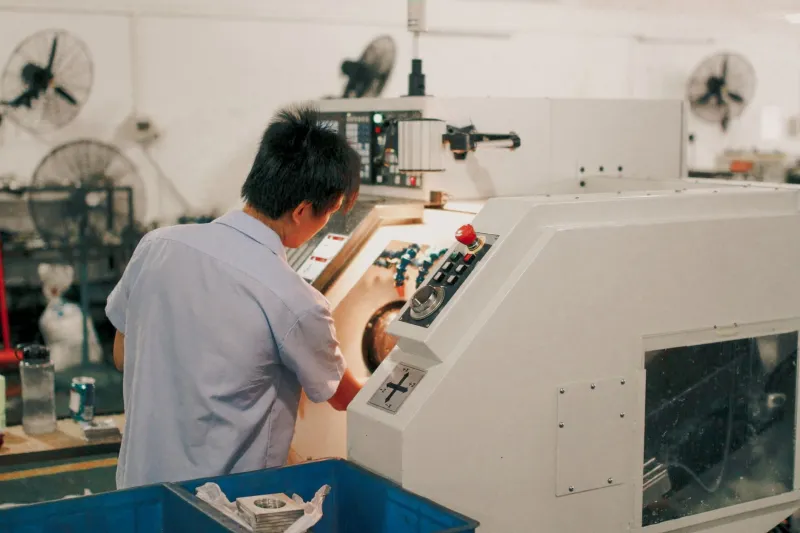
There is a quiet revolution taking place on the floors of American manufacturing facilities and construction yards. It does not involve gleaming new machines arriving on flatbed trailers. Instead, it involves engineers and technicians hovering over equipment that may be fifteen or twenty years old, installing programmable logic controllers, digital sensors, and human-machine interfaces onto frames that were built long before such technology existed. The retrofit movement is gaining momentum—and for industrial buyers navigating tight capital environments, it deserves serious strategic attention.
The Problem With the Binary Choice
For years, the conventional wisdom in heavy equipment management offered two options when older machinery began showing its age: replace it outright or continue operating it as-is while accepting declining efficiency and rising maintenance costs. Both paths carry significant drawbacks in the current environment.
New equipment procurement is expensive, complicated by supply chain delays, and often accompanied by lengthy lead times that disrupt operational planning. On the other hand, aging-in-place with outdated controls means accepting slower cycle times, higher energy consumption, increased operator error rates, and growing incompatibility with modern facility management systems. Neither option serves the competitive interests of a manufacturer trying to hold margins in a demanding market.
Retrofitting legacy equipment with contemporary control systems has emerged as a third path—one that preserves the structural and mechanical value already embedded in existing assets while dramatically upgrading their functional intelligence. Done correctly, it can extend equipment lifecycle by a decade or more while delivering performance metrics that approach those of new machinery.
What Retrofitting Actually Involves
The term "retrofit" encompasses a wide range of interventions, and it is important for buyers to understand what is genuinely achievable versus what represents marketing overstatement.
At the most accessible end of the spectrum, a controls retrofit might involve replacing an outdated relay-based electrical panel with a modern PLC system, adding digital readouts and touchscreen interfaces, or integrating basic sensor arrays that feed into a facility's existing data infrastructure. These upgrades can frequently be completed during scheduled maintenance windows with minimal production disruption.
More ambitious retrofits involve replacing entire hydraulic control systems with electrohydraulic alternatives, integrating servo drives and variable-frequency drives into equipment that previously operated on fixed-speed motors, or adding machine vision and proximity sensing capabilities that enable semi-autonomous operation. These interventions require more extensive downtime, greater technical expertise, and more careful compatibility analysis—but they also deliver correspondingly larger performance gains.
The most complex retrofit scenarios involve equipment that serves as a node in a larger automated production line. Here, modernizing the machine's controls must be coordinated with the broader facility automation architecture, often requiring collaboration between the equipment owner, the retrofit specialist, and the facility's automation systems integrator.
Conducting a Rigorous Cost-Benefit Analysis
The financial case for a retrofit must be built on honest numbers, not optimistic assumptions. Several variables deserve careful examination before committing to a modernization project.
First, assess the mechanical condition of the equipment's core structural and drivetrain components. A controls upgrade cannot compensate for a worn spindle, a fatigued frame, or hydraulic components approaching end-of-life. Retrofitting makes economic sense when the machine's foundational systems remain sound; it makes poor sense when the controls upgrade would simply reveal additional mechanical deficiencies that then require their own remediation.
Second, quantify the performance gap between the equipment's current output and what a retrofit would realistically deliver. Productivity improvements of 15 to 30 percent are commonly cited for well-executed controls upgrades on production machinery, but these figures vary significantly depending on equipment type, application, and operator skill level. Work with retrofit specialists who can provide documented case data from comparable installations rather than theoretical projections.
Third, compare the total retrofit investment—including installation labor, downtime costs, and post-installation training—against the equivalent cost of new equipment acquisition, including delivery, installation, commissioning, and operator familiarization. In many cases, a comprehensive retrofit can be completed for 25 to 50 percent of new equipment cost while recovering 70 to 85 percent of new-equipment performance levels. For capital-constrained operations, that arithmetic is compelling.
Regulatory and Compliance Considerations
Modernizing equipment controls is not purely a technical exercise. American manufacturers must navigate a regulatory landscape that intersects with retrofit decisions in several important ways.
OSHA machinery safety standards require that retrofitted equipment meet current safety requirements, which may differ substantially from the standards in force when the original machine was manufactured. Adding new control systems to older equipment can trigger compliance reviews, particularly regarding guarding, lockout/tagout provisions, and emergency stop functionality. Engaging a qualified safety engineer as part of the retrofit planning process is not optional—it is a prudent investment that protects both workers and the operation from regulatory exposure.
Environmental compliance is another consideration for equipment categories where emissions or fluid management are regulated. Upgrading hydraulic control systems, for example, may create an opportunity to simultaneously address fluid containment and spill prevention requirements that older system designs did not adequately address.
Finally, buyers should investigate whether a controls retrofit affects the equipment's classification for insurance or financing purposes. Some insurers and lenders treat comprehensively retrofitted equipment differently than unmodified legacy assets, which can have implications for coverage terms and asset valuation.
Where Retrofits Deliver the Strongest Returns
Not all equipment categories offer equal retrofit potential. Based on documented industry experience, several categories consistently deliver strong returns on modernization investment.
CNC machine tools and metalworking equipment represent perhaps the most mature retrofit market. Replacing aging CNC controllers with current-generation systems frequently restores full programming capability, enables integration with modern CAD/CAM workflows, and can extend machine life by ten to fifteen years at costs well below replacement. American manufacturers in precision machining and fabrication have embraced this approach extensively.
Hydraulic press and forming equipment is another strong candidate category. These machines are often mechanically robust for decades, and their performance limitations are frequently rooted in outdated hydraulic controls rather than structural wear. Electrohydraulic retrofit packages from several established suppliers can transform the precision, repeatability, and energy efficiency of existing press equipment.
Material handling systems—including overhead cranes, conveyor systems, and automated guided vehicle infrastructure—also offer significant retrofit potential, particularly as facilities seek to integrate legacy handling equipment into modern warehouse management and production scheduling systems.
Building Retrofit Into Your Capital Planning Cycle
For industrial buyers who have not yet incorporated retrofit evaluation into their capital planning process, the time to start is now. The competitive landscape rewards manufacturers who extract maximum productive value from deployed assets while preserving capital flexibility for strategic investments.
A practical starting point is a systematic audit of the existing equipment fleet, categorizing assets by mechanical condition, control system vintage, and performance gap relative to current production requirements. Machines that score well on mechanical condition but poorly on control system modernity are natural retrofit candidates. Those with both mechanical and control deficiencies belong in the replacement queue.
Establishing relationships with qualified retrofit specialists—firms with documented experience in your specific equipment categories—is equally important. The retrofit market includes a wide range of providers, and the quality of engineering assessment, system design, and post-installation support varies considerably. Vetting potential partners before a project is urgent will yield better outcomes than selecting under pressure.
The manufacturers who are gaining ground in American industry today are not necessarily those with the newest equipment on their floors. They are the ones who have learned to think precisely about where capital creates the most durable competitive advantage—and who recognize that sometimes, the smartest investment is in the brain, not the body, of the machines they already own.