Beyond the Birthday: Why Machine Hours, Component Health, and Capital Timing Matter More Than Age in Rebuild-or-Replace Decisions
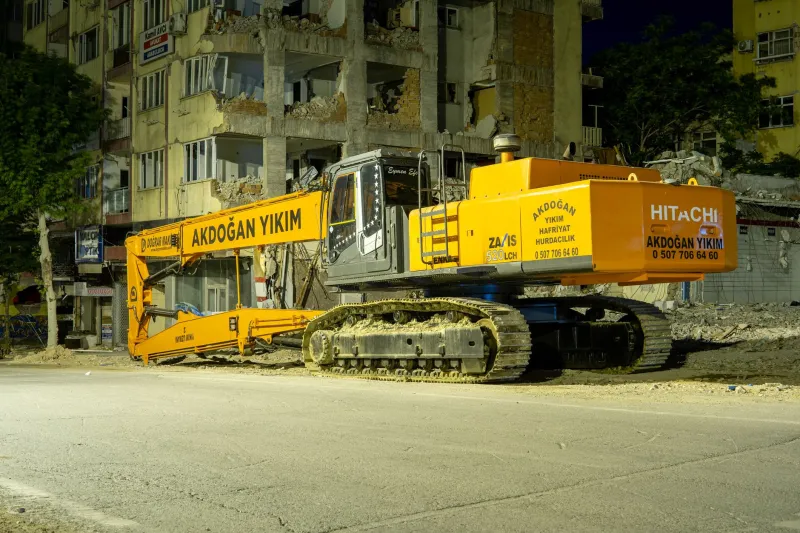
There is a persistent tendency among equipment operators to treat machine age as a proxy for financial viability. A ten-year-old excavator feels like a liability. A three-year-old dozer feels like an asset. These instincts are understandable — and frequently wrong.
The rebuild-or-replace decision is one of the most consequential choices a fleet manager or equipment buyer will make. When it is guided primarily by the calendar rather than by the actual condition and cost trajectory of the machine, the result is often either premature capital expenditure on new iron or a prolonged commitment to equipment that has crossed into genuinely unsustainable territory. Both errors carry measurable financial consequences.
This guide examines the real variables that should drive the decision — and illustrates how they play out across three equipment categories common to American construction and industrial operations.
The Age Fallacy in Heavy Equipment Economics
Machine age correlates with wear, but it does not determine it. A 2014 excavator that spent its first six years on light utility work in dry conditions may carry far less accumulated stress than a 2019 model that logged its hours on a demanding demolition site with inconsistent maintenance intervals.
The more meaningful metric is component-specific degradation. Major assemblies — the engine, hydraulic pump, final drives, swing bearing, and undercarriage on a tracked machine — each follow their own wear curve, and those curves are influenced by application, environment, operator behavior, and maintenance discipline. Two machines of identical age and hour count can present entirely different rebuild profiles depending on these factors.
Fleet managers who rely on age alone are, in effect, averaging across variables that do not average cleanly. The result is decisions that feel systematic but are, in practice, arbitrary.
What a Genuine Cost Analysis Actually Requires
A defensible rebuild-or-replace analysis begins with a component-level inspection, not a glance at the service records. Ideally, this involves a third-party mechanical assessment that documents the remaining service life of each major system individually.
From that inspection, the operator can construct a realistic repair cost projection — not just the immediate repair needed, but the cascade of work likely to follow over the next 12 to 36 months. This forward-looking repair forecast is where many analyses fall short. Operators price the current repair and compare it to a replacement quote, ignoring the probability that additional components will reach end-of-life in close succession.
On the other side of the ledger, the replacement analysis must account for the full acquisition cost of the alternative machine: purchase price, financing terms, any required attachments or configuration changes, extended warranty premiums, and the operator retraining burden if the new model introduces unfamiliar controls or systems.
Only when both sides of the equation are fully costed does a legitimate comparison become possible.
Case Study: The Excavator That Looked Finished
Consider a mid-size hydraulic excavator operating on a civil construction site in the Southeast. At eleven years and approximately 14,000 hours, the machine flagged a hydraulic main pump failure. The repair estimate came in at roughly $22,000, and the fleet manager's first instinct was to treat this as confirmation that the machine had reached end-of-life.
A component-level review told a different story. The engine had been overhauled at 10,000 hours and retained strong compression readings. The undercarriage — often the most expensive wear item on a tracked excavator — had been replaced at 9,500 hours and showed less than 30 percent wear. The swing bearing, boom cylinders, and stick cylinders all presented within acceptable service ranges.
The forward-looking repair forecast identified no major expenditures likely within the following 18 months beyond the pump replacement. Against a replacement cost of approximately $180,000 for a comparable new unit, the $22,000 repair represented a straightforward value proposition. The machine remained in service, and the capital was redeployed toward a loader replacement that genuinely could not be deferred.
Case Study: The Loader That Looked Fine
The inverse scenario is equally instructive. A large wheel loader — seven years old, well within what most operators would consider mid-life — presented for a routine service inspection with no obvious symptoms. Hour count was moderate at 9,200.
The component review, however, revealed converging wear across several systems: the transmission was approaching its recommended rebuild threshold, the front axle showed differential wear that would likely require attention within 1,500 hours, and the lift cylinder seals were beginning to weep under load. Individually, none of these findings was alarming. In combination, they pointed toward a concentrated repair window of $35,000 to $50,000 over the following 18 months.
Additionally, the loader predated the current generation's load-weighing and payload management systems — technology that had demonstrated measurable productivity and fuel efficiency improvements on comparable sites. The technology value gap, combined with the converging repair forecast, shifted the calculus toward replacement on a timeline that surprised the fleet manager, who had assumed the machine had several more years of low-cost operation ahead.
Case Study: The Dozer and the Resale Window
A crawler dozer operating in the upper Midwest illustrates a third dimension of the analysis: resale market timing. The machine was twelve years old but had been well-maintained, carried a recently rebuilt final drive, and showed undercarriage wear within acceptable limits. The operator was considering a full machine rebuild at an estimated cost of $55,000.
A used equipment market review revealed that this particular dozer model and vintage was experiencing unusually strong demand in the regional resale market, driven by infrastructure project activity and constrained new equipment availability. Resale value estimates ranged from $68,000 to $78,000 — a figure that would erode significantly once the machine accumulated additional hours or the supply constraint eased.
In this case, the most financially sound decision was neither a full rebuild nor a straight replacement. The operator sold the machine at the market peak, captured equity that offset a substantial portion of the replacement cost, and acquired a newer unit under favorable financing terms. The rebuild investment, had it been made, would have increased the machine's value by far less than its cost.
Building a Decision Framework That Holds Up
The common thread across these cases is that no single variable — not age, not hours, not the size of the most recent repair estimate — is sufficient to drive the decision reliably. A sound framework integrates at minimum four inputs:
Component degradation profile. What is the actual remaining service life of each major system, assessed independently?
Forward repair forecast. What is the realistic cost of keeping the machine operational over the next 24 to 36 months, accounting for the probability of cascading repairs?
Technology value gap. Does the replacement generation offer productivity, fuel efficiency, or safety improvements substantial enough to justify the acquisition premium?
Resale market conditions. Is the current market environment favorable for liquidating the existing asset, and does deferring that decision carry meaningful risk of value erosion?
Operators who build this analysis into a repeatable process — rather than treating each decision as a one-off judgment call — consistently make better capital allocation choices across their fleets.
The Cost of Getting It Wrong
Premature replacement drains capital and generates depreciation exposure on equipment that could have continued generating productive returns. Delayed replacement locks operations into escalating maintenance costs, reliability risk, and the opportunity cost of foregone productivity gains.
Neither error is trivial. In a competitive operating environment, where margins in construction and manufacturing are under persistent pressure, the discipline to evaluate these decisions rigorously — rather than by instinct or habit — represents a genuine source of financial advantage.
Machine age is a starting point for the conversation. It should not be the end of it.