Timing Is Everything: How Savvy Industrial Buyers Leverage Seasonal Equipment Cycles to Cut Costs and Secure Capacity
American construction and manufacturing operations run on calendars that are anything but random. Earthmoving activity accelerates with spring thaws. Aggregate production peaks through summer. Commercial construction pushes hard through the fall before winter weather forces slowdowns across much of the country. Manufacturing sectors tied to agriculture, energy, and consumer goods follow their own recurring rhythms.
Yet despite this predictability, a significant number of industrial buyers treat equipment acquisition as a reactive exercise — purchasing under pressure when a machine fails, when a project demands immediate capacity, or when a competitor's idle unit becomes available. That reactive posture is expensive. It puts buyers at the weakest possible point in any negotiation and guarantees that decisions are made on the seller's timeline rather than the buyer's.
A more disciplined approach begins with a straightforward premise: if demand is cyclical, so is pricing leverage. And buyers who internalize that principle can extract meaningful financial advantage from the same market dynamics that trap less-prepared operations into overpaying.
How Seasonal Demand Moves Equipment Prices
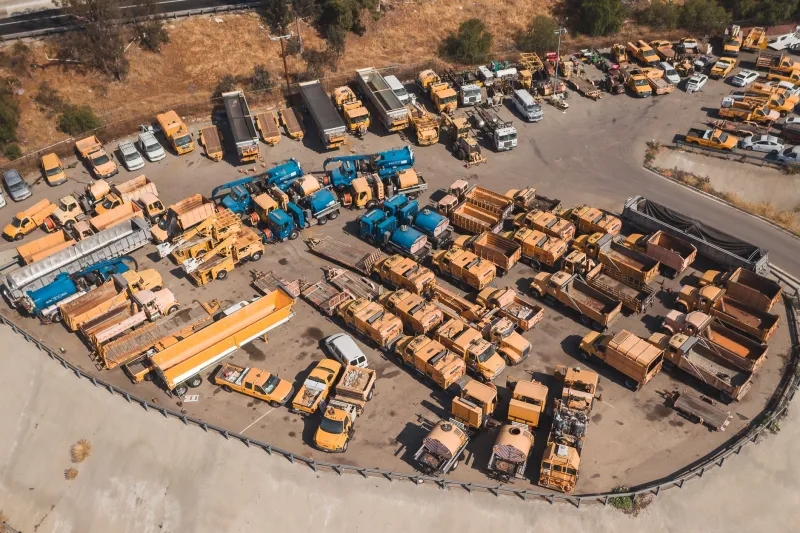
Heavy equipment markets do not reset to zero between seasons. Dealers carry floor-plan financing costs on every unit sitting in their yards. OEM production schedules push new inventory into distribution channels on predictable timelines. Rental fleets rotate aging units into the used market at consistent intervals — often at year-end to manage depreciation and asset valuations.
The result is a market with identifiable pressure points. During peak construction season — roughly April through September across most of the continental United States — equipment availability tightens, dealers have less incentive to negotiate, and rental rates climb. Buyers competing for the same machines are, in effect, bidding against seasonal urgency.
Contrast that with the November-through-February window. Dealer inventory levels are typically higher. Floor-plan costs are accumulating with no offsetting revenue. Regional construction activity in northern and midwestern states has contracted sharply. Rental companies are assessing their fleets and preparing to offload units that don't meet utilization thresholds for the coming year.
This is the structural buying window that experienced procurement professionals know to target — and that many operations still fail to use.
The Off-Season Buying Advantage: What It Actually Looks Like in Practice
The financial differential between peak-season and off-season acquisition is not trivial. Industry professionals consistently report negotiating discounts of 8 to 15 percent on comparable units purchased during winter months versus late spring. On a $250,000 piece of equipment, that spread represents $20,000 to $37,500 in direct capital savings — before factoring in financing costs on a lower principal balance.
Beyond outright price, off-season purchasing frequently yields better terms in adjacent areas:
- Extended warranties that dealers are reluctant to offer when demand is strong
- Deferred delivery arrangements that allow buyers to take title now at current pricing but accept delivery when needed
- Bundled parts packages that add meaningful operational value without proportional cost increases
- More favorable financing structures, particularly when dealers are working to clear year-end inventory before new model allocations arrive
None of these advantages are guaranteed, and they require buyers to approach negotiations with clear specifications and demonstrated purchase readiness. Dealers respond to serious buyers; window-shoppers get standard pricing regardless of the season.
Building a Forward-Looking Equipment Calendar
The operational prerequisite for seasonal buying is planning horizon. A buyer who needs a motor grader in April cannot exploit the January pricing window unless the need was anticipated months earlier. This sounds obvious, but many construction and manufacturing operations lack the internal processes to translate project pipelines into equipment procurement timelines with sufficient lead time.
A practical framework involves three steps:
1. Map peak demand against the asset schedule. Identify which equipment categories face the highest utilization pressure during your operation's peak months. These are the machines worth prioritizing in your off-season buying calendar.
2. Establish a rolling 12-to-18-month procurement outlook. Rather than budgeting equipment by calendar year in isolation, maintain a forward view that connects anticipated project volume to specific machine requirements. This allows procurement teams to identify acquisition windows that align with seasonal price softness.
3. Differentiate between core fleet and surge capacity. Owned assets should cover predictable baseline utilization. Rental and short-term leasing arrangements are better suited for surge demand — but even rental capacity should be reserved in advance, before spring competition drives up rates and reduces availability.
Leasing Strategy Through the Cycle
Seasonal dynamics affect leasing markets in ways that parallel, but do not exactly mirror, the outright purchase market. Operating lease rates for heavy equipment tend to be stickiest — rental companies and leasing firms price for annualized utilization rather than monthly demand fluctuations. However, multi-year lease agreements negotiated during slow periods often carry more favorable base rates and residual value assumptions than those structured at peak season.
For operations that rely heavily on leased equipment, the relevant seasonal strategy shifts from acquisition timing to contract timing. Initiating lease negotiations in the fourth quarter, when lessors are motivated to lock in revenue for the coming year, frequently produces better outcomes than waiting until spring when the same lessors have more options.
Short-term rental decisions — those covering a single project or a few months — are less amenable to seasonal optimization. In those cases, the priority should be securing commitments from rental suppliers as early as possible, even if the rental period itself falls in peak season. Availability, not price, becomes the primary constraint.
Inventory Management as a Competitive Instrument
For operations managing larger fleets, parts inventory strategy intersects with seasonal equipment cycles in a financially meaningful way. Component lead times for wear items — ground-engaging tools, hydraulic seals, filtration assemblies, track components — tend to lengthen during peak season as demand across the industry spikes simultaneously.
Building strategic parts inventory during the off-season accomplishes two things: it reduces the risk of downtime during high-utilization months, and it allows procurement at pre-peak pricing before supplier surcharges and expedite fees enter the equation. The working capital cost of carrying modest parts inventory is generally far lower than the downtime cost of waiting on a backordered component during a critical project window.
The Discipline Behind the Strategy
Seasonal buying is not a passive exercise. It requires organizational commitment to planning timelines that feel premature by conventional standards, the financial flexibility to commit capital before operational urgency creates that commitment for you, and a procurement discipline that resists the temptation to defer decisions until need becomes acute.
For American construction and manufacturing operations competing on margins that leave little room for avoidable cost, that discipline is not optional — it is a structural advantage. The buyers who understand cyclical market dynamics and position themselves to act during demand troughs consistently outperform those who let the calendar dictate their terms.
The market will always move in cycles. The question is whether your operation moves with them — or against them.