The Quiet Destroyer: How Rotational Misalignment Is Draining Equipment ROI Across American Industry
A Problem Hidden in Plain Sight
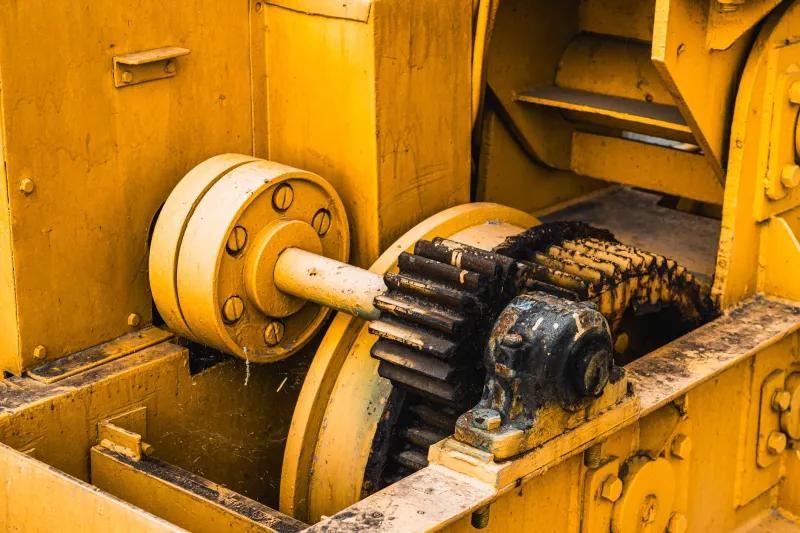
In virtually every manufacturing plant and heavy construction operation across the United States, rotating equipment is quietly destroying itself. Pumps, motors, compressors, gearboxes, and drive shafts — the mechanical workhorses of American industry — are consuming more energy, wearing through bearings at accelerated rates, and inching toward catastrophic failure, often while maintenance teams remain entirely unaware.
The culprit, in a significant proportion of these cases, is misalignment. Not dramatic, visible misalignment that announces itself immediately, but the subtle angular and parallel deviations that develop during installation, accumulate through thermal expansion, or drift gradually as foundations settle and mounting surfaces shift. Industry estimates suggest that misalignment contributes to somewhere between 50 and 70 percent of rotating equipment failures — a figure that, when laid against the total cost of industrial downtime and component replacement, represents an enormous and largely preventable financial drain.
Yet for all its prevalence, misalignment rarely receives the same attention in operational planning as more visible failure modes. Contamination, lubrication failure, and overloading are well-documented concerns. Alignment, by contrast, tends to be treated as a one-time installation task rather than an ongoing maintenance discipline — and that distinction carries serious consequences.
Understanding What Misalignment Actually Does
To appreciate the full cost of misalignment, it helps to understand the mechanical reality of what happens when two coupled shafts are even slightly out of true. In a properly aligned system, rotational forces travel cleanly through the drivetrain. When alignment deviates — whether through angular offset, parallel offset, or a combination of both — those forces become uneven. The coupling absorbs what it can, but the excess stress radiates outward into bearings, seals, and shafts.
Bearings are typically the first casualties. Designed to handle radial and axial loads within defined parameters, they begin to fail prematurely when misalignment introduces forces outside those parameters. What might have been a five-year bearing service life under proper alignment conditions can shrink to eighteen months or less under chronic misalignment — a replacement cost that compounds across an entire fleet.
Seals suffer a related fate. Shaft deflection caused by misalignment creates dynamic movement that seals were not designed to accommodate, accelerating wear and opening pathways for contamination. In hydraulic and lubrication systems, this is particularly damaging, as seal failure introduces a secondary failure cascade that can compromise far more than the original component.
Energy consumption is a third, frequently underestimated consequence. Studies conducted across industrial facilities have documented energy penalties of 5 to 15 percent attributable to drivetrain misalignment — a figure that, when translated into annual electricity costs for a mid-sized manufacturing operation, can represent tens of thousands of dollars in pure waste. In an era of rising energy costs and tightening operational margins, that is not a number any procurement or operations manager can afford to ignore.
Recognizing the Signatures of Misalignment
One of the practical challenges of addressing misalignment is that its early indicators are easy to misattribute. Elevated vibration levels, for instance, are frequently dismissed as normal operational noise or attributed to an unrelated component. Premature bearing failures get logged as product quality issues or lubrication deficiencies. Coupling wear is treated as an expected consumable cost rather than a diagnostic signal.
Operators who know what to look for, however, can identify misalignment well before it reaches a destructive stage. Several diagnostic approaches are accessible even to maintenance teams without specialized equipment:
Vibration analysis remains the most reliable non-invasive diagnostic tool available. Misalignment produces characteristic vibration signatures — typically elevated readings at one and two times the rotational frequency — that distinguish it from imbalance, looseness, or bearing defects. Portable vibration analyzers, now available at price points accessible to smaller operations, allow maintenance technicians to trend these signatures over time and flag deviating equipment before failure occurs.
Thermal imaging provides a complementary perspective. Misaligned couplings and bearings generate excess heat that infrared cameras can detect during normal operation. Comparing thermal profiles across similar equipment provides a rapid, non-contact method of identifying outliers that warrant closer inspection.
Physical inspection of coupling wear patterns offers a lower-technology but still informative diagnostic. Uneven elastomeric insert wear, fretting corrosion on jaw couplings, or localized fatigue cracking on disc-type couplings all carry alignment information for a trained eye.
Operational data — specifically, trends in energy consumption per unit of output and bearing replacement frequency by asset — can also surface misalignment problems at the fleet level, even when individual equipment inspections have not been prioritized.
The Case for Precision Alignment Programs
Addressing misalignment as an ongoing maintenance discipline, rather than a one-time installation task, requires a structured approach and a modest but meaningful investment in tooling and training.
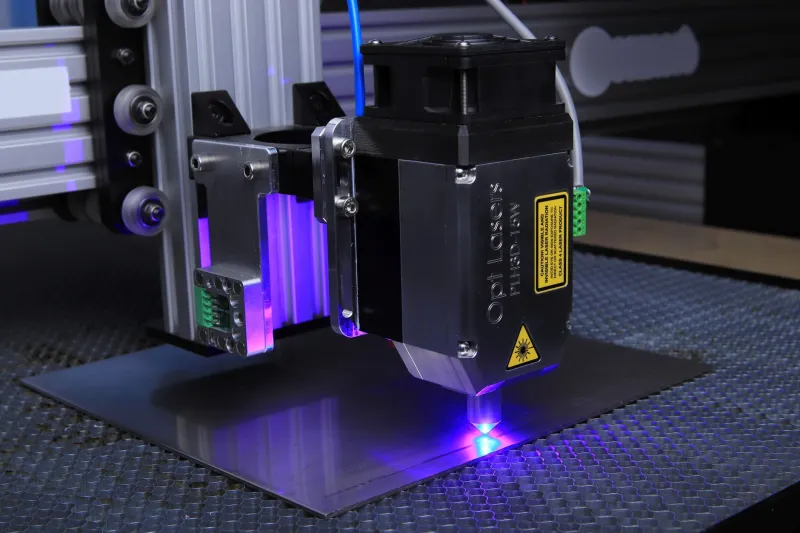
Laser alignment systems have largely displaced dial indicators as the tool of choice for precision shaft alignment in industrial settings. Modern laser systems allow a single technician to achieve alignment tolerances that would have required a skilled team and significant time investment using traditional methods. The accuracy gains are substantial: laser-aligned equipment routinely achieves tolerances an order of magnitude tighter than dial indicator work, and the time required per alignment check has dropped considerably as the technology has matured.
Beyond tooling, effective alignment programs require documented baselines and scheduled re-verification intervals. Thermal growth — the dimensional changes that occur as equipment reaches operating temperature — must be accounted for during cold alignment, using either thermal growth calculations or real-time hot alignment techniques. Foundation integrity must be verified, as soft foot conditions (where a machine foot does not sit flat on its mounting surface) can negate precise alignment work almost immediately.
The return on this investment is well-documented across American industrial operations. Case studies from manufacturing facilities that have implemented formal precision alignment programs consistently report bearing replacement intervals extending by 40 to 60 percent, measurable reductions in energy consumption, and significant decreases in unplanned downtime attributed to drivetrain failures. When those gains are expressed in dollar terms across a fleet of ten, twenty, or fifty rotating assets, the payback period for alignment program investment is typically measured in months, not years.
Rethinking Alignment as a Strategic Asset
For industrial buyers and operations managers evaluating where to direct maintenance investment, precision alignment programs occupy an unusual position: they are simultaneously high-impact and underutilized. The tools are available. The diagnostic methods are proven. The financial case is straightforward to construct. Yet the discipline remains inconsistently applied across American industry, largely because its benefits are invisible until the alternative — chronic component degradation and eventual failure — makes them undeniable.
At New India Machinery, we work regularly with procurement and maintenance professionals who are grappling with the cumulative cost of rotating equipment failures. The conversation often begins with bearing sourcing or coupling replacement, but the more productive discussion is nearly always about what is driving the replacement cycle in the first place. Misalignment, in our experience, is a far more frequent root cause than most operations initially expect.
Investing in the components and tooling that support a serious alignment program — quality couplings with appropriate flexibility ratings, precision shims, laser alignment instrumentation, and the training to use them effectively — represents one of the most durable forms of equipment ROI protection available to American industrial operators today. The damage misalignment causes is quiet. The decision to address it systematically does not have to be.