Made in America, Again: What the Reshoring of Heavy Equipment Manufacturing Means for Industrial Buyers
The supply chain crises of the early 2020s did more than delay shipments and inflate prices. They exposed a structural vulnerability that many U.S. industrial operations had quietly accepted for years: a deep dependence on overseas manufacturing for the equipment and components that keep American industry running. That exposure, combined with evolving trade policy and a surge of federal investment in domestic manufacturing capacity, has accelerated a reshoring trend that industry observers had been predicting — and debating — for the better part of a decade.
For procurement managers, plant operators, and construction equipment buyers, the reshoring of heavy equipment manufacturing is not an abstract economic development. It is a supply chain reality that is already affecting lead times, pricing structures, and parts availability in ways that reward informed buyers and penalize those who continue to operate on pre-pandemic assumptions.
The Forces Behind the Shift
Reshoring in the heavy equipment sector is being driven by a convergence of pressures rather than any single cause, and understanding those pressures helps buyers anticipate where the trend is heading.
Supply chain fragility is the most frequently cited factor. The disruptions that began in 2020 and persisted well into subsequent years revealed the true cost of extended, globally distributed supply chains — costs that rarely appeared in the procurement models that made offshore manufacturing appear so compelling. When a single port congestion event or a regional lockdown could delay critical equipment deliveries by months, the economics of nearshoring and domestic production began to look considerably more attractive to manufacturers and their customers alike.
Trade policy has amplified that calculus. Tariff structures affecting steel, aluminum, and finished equipment imports have shifted the landed cost of foreign-manufactured machinery upward, narrowing or in some cases eliminating the price advantage that overseas producers had historically enjoyed. The CHIPS and Science Act, the Inflation Reduction Act, and infrastructure spending authorized under the Infrastructure Investment and Jobs Act have simultaneously created strong domestic demand for heavy equipment while providing incentives for manufacturers to locate production closer to their largest customers.
Labor cost differentials, while still real, have also compressed. Wage growth in major manufacturing economies in Asia, combined with the productivity advantages of advanced automation in U.S. facilities, has made domestic production economically viable for equipment categories where it was previously uncompetitive.
Which Equipment Categories Are Coming Home First
Reshoring is not occurring uniformly across all equipment types. Buyers should understand which categories are seeing the most significant domestic production investment and plan their procurement strategies accordingly.
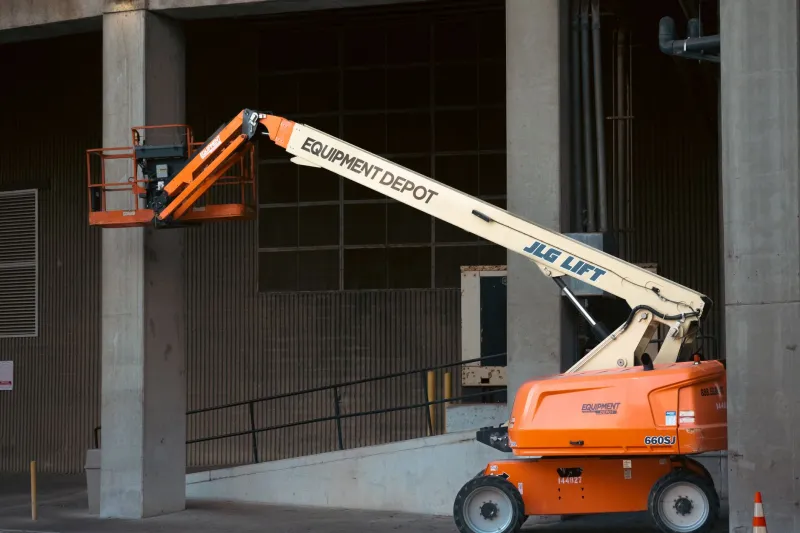
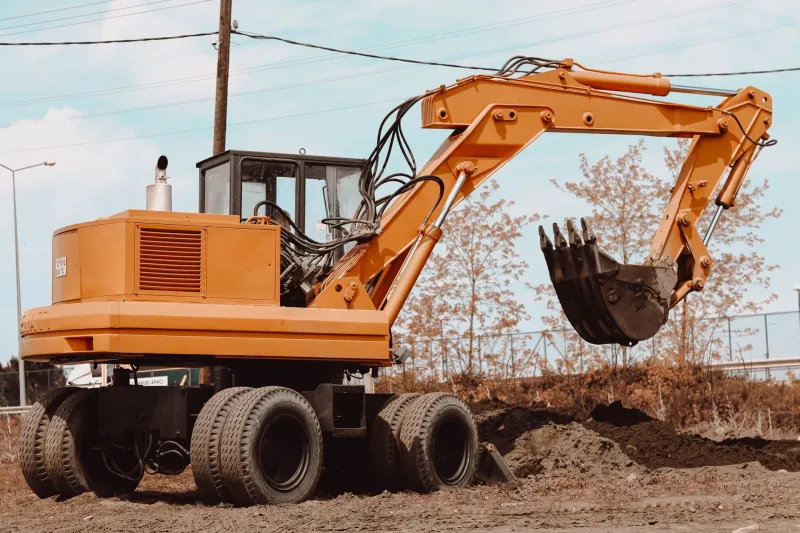
Earthmoving and construction equipment has been among the most active reshoring sectors. Several major OEMs have announced or expanded U.S. manufacturing operations for excavators, wheel loaders, and compact equipment lines, citing proximity to infrastructure project demand and the logistics advantages of domestic production for large, heavy units that are expensive to ship internationally.
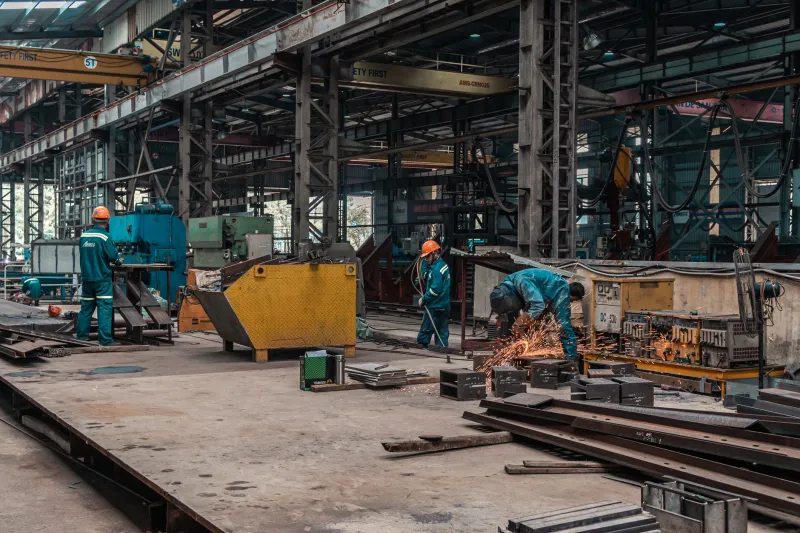
Industrial presses and metalworking equipment is another category where domestic production is growing, driven partly by defense-sector demand requirements for domestically sourced capital equipment and partly by the needs of the automotive and aerospace supply chains that are themselves reshoring assembly operations.
Material handling equipment, including forklifts, conveyor systems, and automated warehouse machinery, is seeing substantial domestic investment as the e-commerce and logistics sectors drive demand that outpaces what import-dependent supply chains can reliably fulfill.
Replacement parts and components — hydraulic pumps, control systems, structural fabrications — represent perhaps the most consequential reshoring development for buyers managing existing equipment fleets. Domestic parts production reduces lead times for critical components and provides supply chain redundancy that offshore-only sourcing cannot match.
What This Means for Availability and Lead Times
The immediate effect of reshoring on equipment availability is nuanced. In the short term, new domestic production capacity is not yet sufficient to meet total U.S. demand in most equipment categories, meaning that lead times for certain models and configurations remain extended. Buyers who assume that reshoring has resolved availability challenges may find themselves waiting longer than anticipated for specific units.
However, the medium-term trajectory is meaningfully more favorable than the pre-reshoring baseline. As domestic production capacity comes online and supply chains shorten, the extreme lead time volatility that characterized the 2021-2023 period should moderate. Buyers who establish relationships with distributors connected to domestically produced equipment lines will be better positioned to secure reliable delivery commitments as that capacity ramps.
For parts procurement specifically, the reshoring of component manufacturing is already producing tangible benefits in lead time reduction for certain categories. Hydraulic components and structural fabrications sourced from domestic producers are arriving in weeks rather than the months that characterized overseas procurement during peak disruption periods.
Pricing Implications: A More Complex Picture
The pricing impact of reshoring defies simple characterization. Domestically manufactured equipment frequently carries a higher sticker price than comparable imported units, reflecting higher labor costs and the capital investment required to establish or modernize U.S. production facilities. Buyers focused exclusively on unit acquisition cost may find that calculus discouraging.
Total cost of ownership, however, tells a different story in many cases. Shorter lead times reduce the carrying cost of equipment inventory buffers that buyers have maintained to hedge against import delays. Domestically sourced parts availability reduces downtime duration when equipment requires repair. Warranty and service support is frequently more accessible for domestically produced equipment, reducing the resolution time for technical issues.
Buyers evaluating domestically produced equipment against imported alternatives should build these factors explicitly into their procurement analysis rather than relying on purchase price as the primary comparison metric. The operations that have done so most rigorously are frequently finding that the total cost differential is smaller than the sticker price gap suggests — and in high-utilization applications, may favor domestic sourcing.
Adapting Your Procurement Strategy
For industrial buyers navigating this shifting landscape, several practical adjustments merit consideration.
First, extend your planning horizon. Reshoring is a multi-year process, and equipment categories that are currently import-dependent may have meaningfully different domestic availability profiles within two to three years. Procurement planning that accounts for that trajectory will be better positioned than approaches anchored entirely in current conditions.
Second, engage distributors who maintain visibility into both domestic and import supply chains. The ability to compare lead times, pricing, and parts availability across sourcing options in real time is a genuine competitive advantage as the supply landscape continues to evolve.
Third, prioritize parts supply chain assessment when evaluating any equipment purchase. The availability of domestically sourced replacement components for a given equipment line should be a weighted factor in the buying decision, not an afterthought. Equipment that performs well but depends on a fragile import parts supply chain carries risk that belongs in the total cost calculation.
The reshoring of American heavy equipment manufacturing is not a complete solution to supply chain complexity, and it will not unfold on a linear or predictable schedule. But for U.S. industrial buyers who engage with it proactively — understanding which categories are shifting, where domestic capacity is growing, and how procurement models need to adapt — it represents a genuine opportunity to build more resilient, cost-effective equipment supply chains for the years ahead.