Upgrade, Don't Replace: The Financial Logic Behind Retrofitting Aging Industrial Equipment
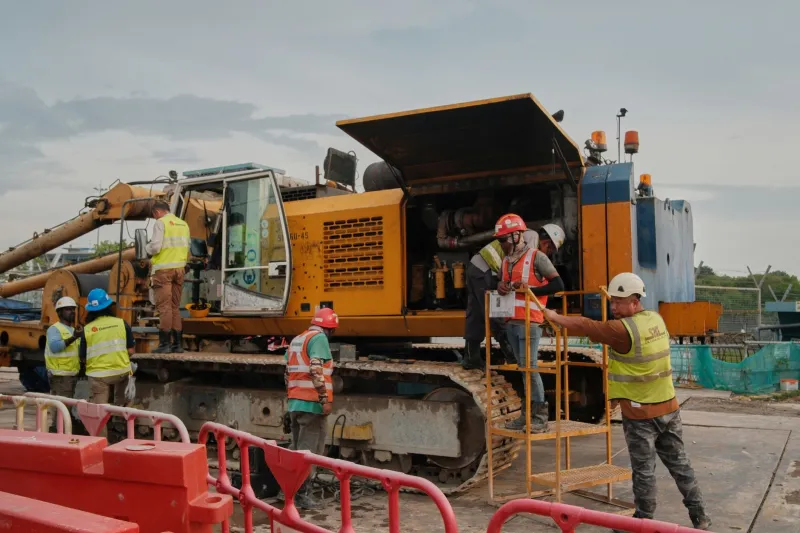
For procurement managers and fleet operators across American manufacturing and construction, the arrival of a new model year from a major OEM triggers a familiar internal debate: hold the existing asset and invest in upgrades, or commit capital to a replacement unit. The instinct to pursue the newest machine is understandable. Marketing materials emphasize fuel efficiency gains, telematics integration, and improved payload ratings. But instinct and financial discipline rarely occupy the same seat at the table.
A disciplined cost-benefit analysis frequently tells a different story — one in which retrofitting existing equipment delivers measurable performance improvements at a fraction of the acquisition cost, with payback timelines that outperform new-iron purchases by a substantial margin.
The Baseline Calculation: What Replacement Actually Costs
The sticker price of a new heavy machine captures only a portion of its true cost of ownership. Procurement teams must account for sales tax, freight, dealer preparation fees, operator retraining, software licensing for integrated telematics platforms, and the productivity drag that accompanies any new equipment commissioning period. Depending on equipment class, these ancillary costs routinely add 12 to 20 percent above the purchase price.
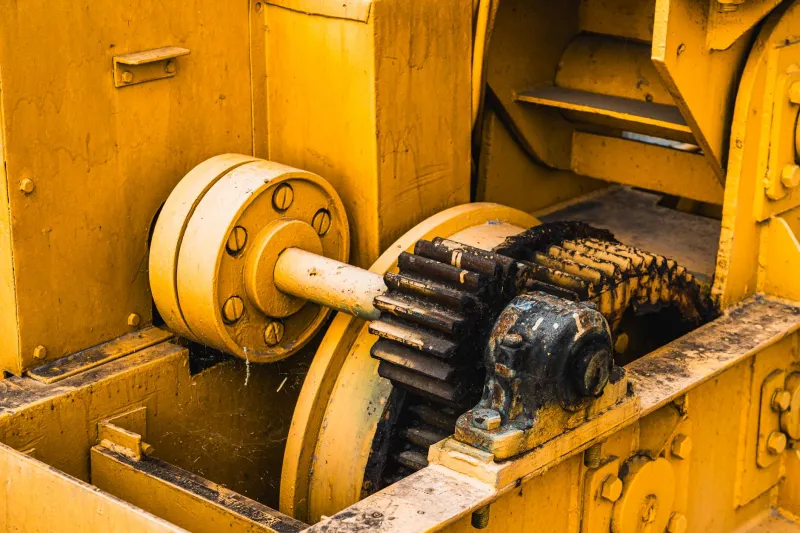
Contrast that with a targeted retrofit program. Replacing a legacy hydraulic system with a modern load-sensing configuration, for instance, can recover 15 to 25 percent in fuel efficiency without touching the machine's structural frame, powertrain, or undercarriage — components that may still carry years of serviceable life. The retrofit investment may represent 20 to 35 percent of a comparable new unit's cost, while delivering 70 to 80 percent of the performance benefit.
This asymmetry is the foundation of retrofit economics.
Where Retrofits Deliver the Strongest Returns
Not every upgrade opportunity is created equal. Retrofit investments tend to generate the highest returns in four specific domains:
Control Systems and Automation. Legacy machines built before the proliferation of programmable logic controllers and CAN bus architecture can be modernized with aftermarket control packages that enable precision operation, remote diagnostics, and data logging. These upgrades can extend a machine's productive relevance by a decade or more, particularly in applications where operator skill consistency is a persistent variable.
Hydraulic Circuit Modernization. Older open-center hydraulic systems are energy inefficient by contemporary standards. Retrofitting closed-center, load-sensing circuits reduces heat generation, lowers fuel consumption, and improves cycle times. For equipment running two or three shifts daily, the fuel savings alone can recover the retrofit investment within 18 to 30 months.
Emissions Compliance Packages. As Tier 4 Final and upcoming Tier 5 standards reshape what equipment is permissible on federally funded job sites and in regulated manufacturing environments, aftermarket emissions retrofit kits offer a path to compliance without fleet replacement. The cost differential between a retrofit kit and a new compliant unit can exceed $80,000 per machine in certain equipment categories.
Attachment and Interface Upgrades. Expanding a machine's application range through modern quick-coupler systems, updated bucket geometries, or purpose-built attachments allows operators to address a broader scope of work without acquiring additional units. This approach improves asset utilization rates — a metric that directly influences the denominator in any cost-per-hour calculation.
ROI Timelines: A Comparative Framework
Consider a mid-size excavator with 12,000 hours on the frame, operating in a quarrying application in the Midwest. A new equivalent unit carries a list price of $320,000. A comprehensive retrofit — encompassing a hydraulic system overhaul, updated control package, and cab ergonomic improvements — is quoted at $68,000.
Assuming the new unit delivers a 20 percent improvement in cycle efficiency and the retrofit delivers 14 percent, the new machine's performance premium translates to approximately $18,000 in annual productivity value at typical utilization rates. Against an incremental investment of $252,000 (the difference between new and retrofit cost), the payback on the performance premium alone extends beyond 13 years — well past the practical service horizon of most heavy equipment assets.
The retrofit, by contrast, recovers its investment in under four years through fuel savings and productivity gains, while preserving the operator's familiarity with the machine and avoiding the commissioning disruption associated with a new unit.
Real-World Precedents Across American Industry
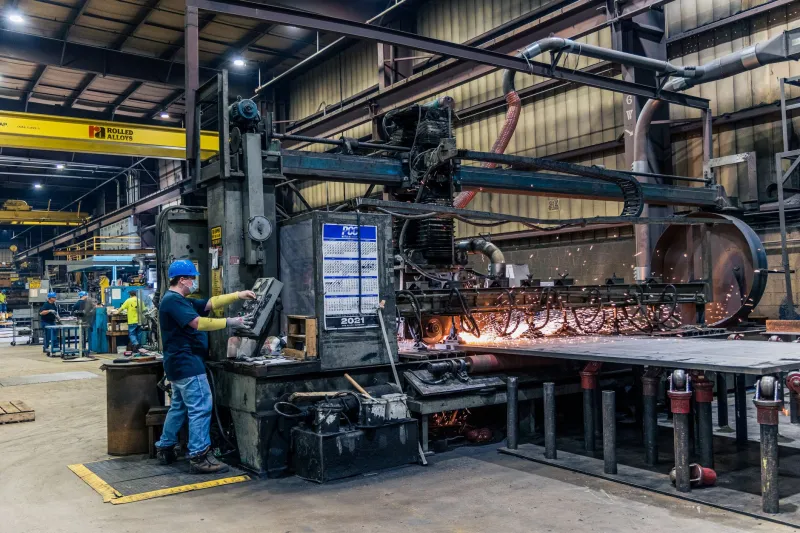
Manufacturers in the aggregate and mining sectors have been among the most aggressive adopters of retrofit strategies. Several large aggregate producers in the Appalachian region have systematically upgraded legacy crushing and screening equipment with variable-frequency drives and updated control systems, extending asset service life by eight to twelve years while maintaining throughput rates competitive with newer installations.
In construction, earthmoving contractors across the Sun Belt have invested in grade control retrofit kits — aftermarket GPS and machine guidance systems — for older dozer and grader fleets. These upgrades, typically priced between $18,000 and $35,000 per unit, reduce rework rates, improve fuel efficiency through optimized blade loading, and bring legacy machines into compliance with project specification requirements that increasingly mandate grade control technology.
When Replacement Does Make Sense
Retrofit economics are not universally favorable. Several conditions shift the calculus toward replacement. Structural fatigue in the machine's primary frame, extensive corrosion in critical weldments, or powertrain wear beyond economical rebuilding thresholds can render retrofit investment impractical. Similarly, when a new model year delivers a step-change performance improvement — not an incremental gain — that directly determines contract competitiveness, the business case for replacement strengthens considerably.
The discipline lies in conducting this analysis rigorously rather than reflexively. Equipment acquisition decisions made on the basis of catalog specifications or sales cycle timing rather than quantified operational data tend to underperform against their projected returns.
Building a Retrofit Decision Protocol
Organizations that consistently extract superior value from their equipment assets share a common practice: they maintain a structured evaluation protocol that triggers at defined intervals — typically at 8,000 hours for mid-size machines and 15,000 hours for large-format equipment — rather than waiting for failure events to force the decision.
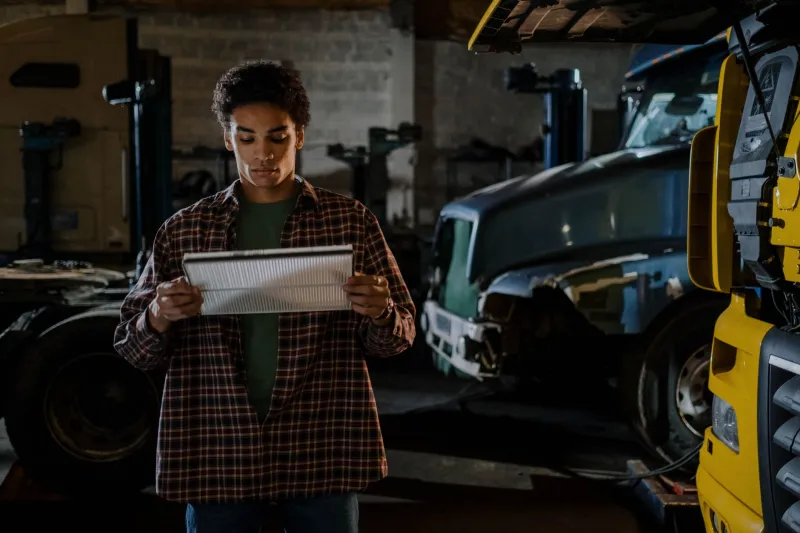
This protocol should incorporate a current-condition assessment from a qualified technician, a component-by-component remaining life estimate, a catalog of available retrofit options with documented ROI projections, and a comparison against the fully loaded cost of replacement. The output is not a foregone conclusion in either direction. It is a defensible, data-supported recommendation that aligns capital allocation with operational reality.
For American industrial buyers operating in an environment of elevated equipment prices, extended delivery lead times, and persistent financing cost pressure, that discipline is not merely prudent. It is a competitive necessity.