The Vanishing Mechanic: How Technician Scarcity Is Redesigning Maintenance Itself

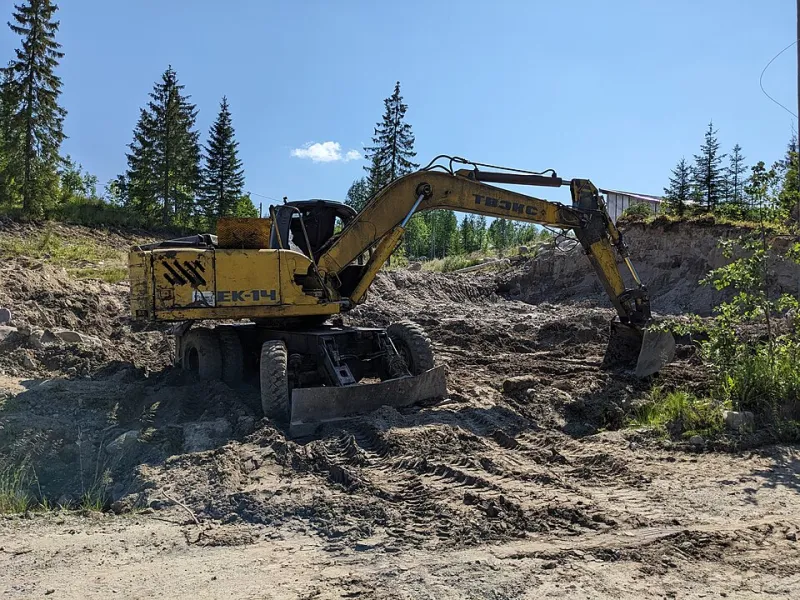
Photo by Photo by Sindy Süßengut on Unsplash on Unsplash
For most of the last two decades, maintenance planning in American heavy equipment operations followed a familiar hierarchy: what the machine needs, then when the schedule allows, then who is available. The order has quietly inverted. On a growing number of sites, the constraint that shapes every other decision is the third one.
The technician shortage is frequently described as a recruiting problem, and it is. But framing it that way understates what is happening. A labor constraint of this magnitude does not merely make hiring harder; it changes the economics of every maintenance decision made around the machine, from the parts on the shelf to the serviceability of the design itself.
Where the Arithmetic Bites
The demographic pressure is straightforward. A significant share of the trade's most experienced hands entered the workforce in the 1980s and 1990s and is now reaching retirement age, while the pipeline of replacements has not kept pace. Community college diesel programs graduate capable people, but not enough of them, and not always with the diagnostic depth that modern electronically controlled equipment demands.
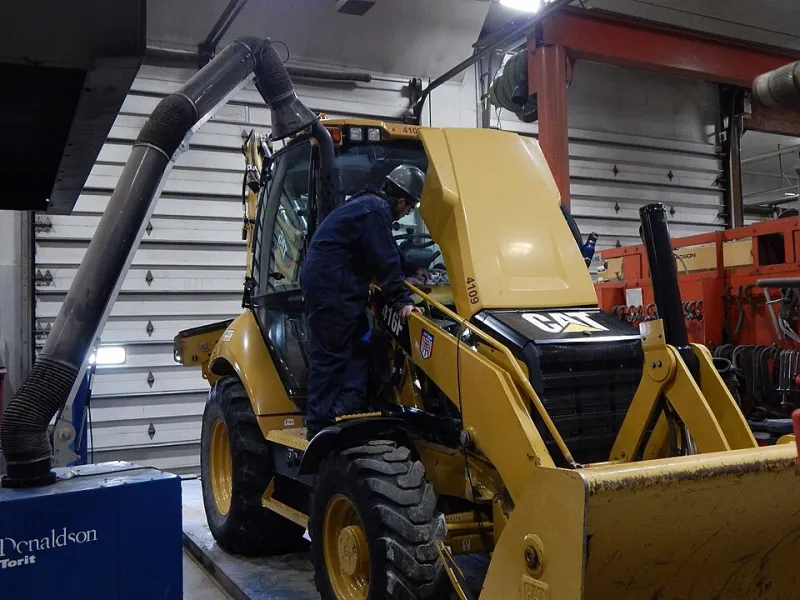
The consequence is not simply fewer mechanics. It is fewer mechanics who can diagnose without a parts cannon. A technician who can read a fault code is common; a technician who can interpret a hydraulic pressure trace, recognize a bearing in the early stage of failure by sound, or trace an intermittent electrical fault through a harness is not. That senior layer is where the shortage is most acute, and it is the layer that the entire maintenance system implicitly depends on.
When Deferral Becomes the Default
The first casualty of labor scarcity is preventive work. Adjustments, inspections, and scheduled component replacements are the easiest tasks to push when the crew is already committed to breakdowns. Push them long enough and the operation migrates silently from preventive maintenance toward run-to-failure — not as a deliberate strategy, but as an accretion of postponed decisions.
This migration is dangerous precisely because it is invisible in the short term. Machines keep producing. Then a cluster of failures arrives together, the remaining technicians are pulled fully into reactive work, and the deferral deepens. Operators who recognize this loop early have an advantage; those who mistake it for a temporary stretch of bad luck usually discover otherwise.
Design Becomes a Maintenance Decision
Equipment specification has historically weighted productivity, capacity, and acquisition cost. Those criteria still matter, but serviceability deserves a heavier vote than it once received. A machine that requires two technicians and a specialized lift for a routine service is a different asset than one that a single technician can maintain safely and quickly.
Buyers would do well to ask concrete questions during evaluation: How accessible are the grease points, filters, and drain plugs? Are fasteners standardized across the machine, or does routine work require an assortment of uncommon tools? Is component removal sequenced so that a starter or alternator does not demand the removal of unrelated assemblies? Are service procedures documented in a format a mid-level technician can follow without calling a factory hotline?
Standardization across a fleet carries similar weight. Every additional variant of filter, hose fitting, or sensor multiplies the inventory burden and the chance that the one part needed on a Saturday night is not on the shelf. Fleets that rationalize their parts catalogs are, in effect, converting purchasing discipline into technician hours.
Shifting Labor Off the Machine
Remanufactured and rebuilt components deserve renewed attention in this environment. An exchanged long block, transmission, or hydraulic pump does not eliminate labor, but it relocates it to a facility that specializes in the work and can amortize skilled hands across volume. For an operation whose constraint is on-site technician time, that trade is often favorable even when the component price is higher than an in-house rebuild.
Condition monitoring plays a related role. Telematics, vibration monitoring, and fluid analysis do not replace diagnostic skill, but they concentrate it where it is scarcest. A senior technician reviewing flagged data from forty machines is a better use of that person than forty routine inspections.
Building the Bench Deliberately
The shortage will not be solved by waiting for the market to correct. Operations that are holding their ground tend to share a set of practices: they sponsor apprenticeships rather than merely posting openings; they build relationships with regional technical programs and offer internships that lead to offers; they recruit from adjacent trades and from military maintenance occupations where disciplined troubleshooting habits are already formed; and they pay for the certifications that turn a general mechanic into a specialist.
They also capture knowledge before it walks out the door. Retiring technicians hold diagnostic intuition that exists nowhere in the service manual. Short videos, annotated procedures, and paired assignments that put a junior technician alongside a veteran for a year are inexpensive methods of transferring it. The organizations that treat documentation as a maintenance function rather than an administrative one tend to be less fragile when a key person leaves.
What to Do This Quarter
- Audit deferred preventive work and quantify the backlog by machine, not by task.
- Identify the two or three roles where a single departure would halt operations, and begin cross-training now.
- Standardize high-turnover parts across the fleet and stock to the standard.
- Weigh remanufactured exchange against in-house rebuild with technician hours in the calculation, not just parts cost.
- Put serviceability questions into the next equipment specification review.
The labor gap is not a temporary market condition. It is a durable feature of the operating environment, and maintenance strategies that assume an unlimited supply of skilled hands are already out of date.