Fewer Dealers, Less Leverage: How Market Consolidation Is Rewriting the Rules for Heavy Equipment Buyers
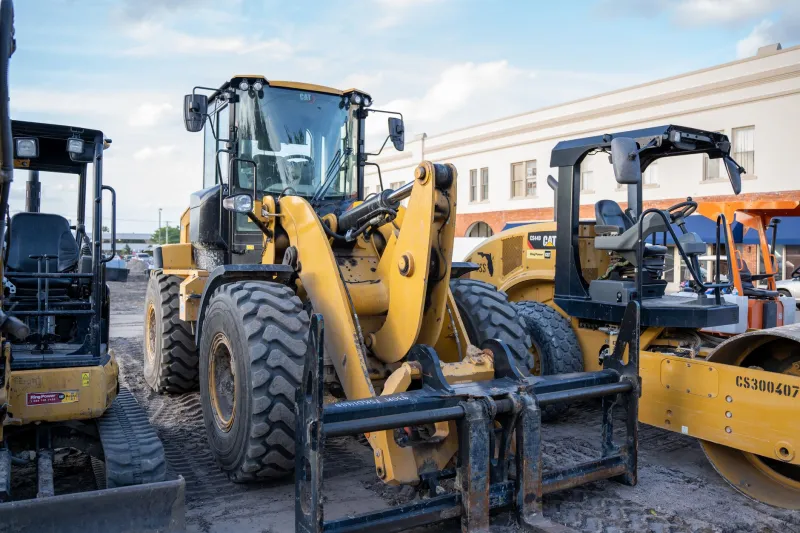
For decades, the regional heavy equipment dealer was a fixture of American industrial commerce. These independent operations competed aggressively for local accounts, offering tailored pricing, flexible service arrangements, and the kind of relationship-driven business that kept buyers in a position of genuine leverage. That landscape has changed dramatically. Across manufacturing centers and construction corridors from the Rust Belt to the Gulf Coast, independent dealerships have been absorbed into large, multi-state distribution networks—and the consequences for buyers are measurable and mounting.
The Consolidation Timeline and Its Scope
The structural shift in heavy equipment distribution did not happen overnight. Beginning in earnest through the 2000s and accelerating after the 2008 financial contraction, private equity capital and OEM-sponsored consolidation programs systematically acquired regional dealers operating under thin margins. By the early 2020s, a handful of national and super-regional distributors controlled significant market share across major equipment categories—from construction earthmoving machinery to industrial lifting equipment and manufacturing-floor material handling systems.
This is not merely a story about business ownership changing hands. When three or four dealers once competed for a manufacturing facility's annual equipment contract, buyers could leverage competing bids to drive down acquisition costs, negotiate extended service terms, and demand parts availability guarantees. When that competitive field collapses to a single authorized distributor within a hundred-mile radius, the leverage calculus inverts entirely.
Market concentration data from the equipment distribution sector reflects this shift. In many metropolitan and industrial regions, buyers who once had access to five or more competing dealerships for a given equipment category now face two—or sometimes one. That arithmetic does not favor the buyer.
How Consolidated Distributors Capture and Hold Pricing Power
Mega-distributors maintain pricing power through several reinforcing mechanisms that are worth examining individually.
Territorial exclusivity arrangements with OEMs formalize geographic monopolies. When a manufacturer grants a single distributor exclusive rights across a multi-state region, it effectively removes the competitive pressure that once kept pricing honest. Buyers cannot simply shop across county lines; the same distributor controls the territory regardless of direction.
Service infrastructure dependency deepens the lock-in. Large consolidated dealers invest heavily in service facilities, technician training programs, and parts warehousing—capabilities that smaller independent shops often cannot match. For buyers whose production schedules depend on rapid equipment servicing, this infrastructure advantage can override pricing concerns entirely. The consolidated dealer knows this, and prices accordingly.
Financing and fleet management bundling creates additional switching friction. When a distributor provides equipment financing, extended service contracts, telematics platforms, and fleet management software under a single commercial relationship, the cost and complexity of transitioning to a competing supplier expands well beyond the equipment price itself.
The Elimination of Competitive Bidding
Perhaps the most tangible consequence of dealer consolidation is the erosion of genuine competitive bidding processes. Procurement managers at manufacturing operations and construction firms across the country report the same pattern: requests for proposals that once attracted four or five competing bids now draw one or two responses—and in some cases, a single quote from the regional mega-distributor who holds all relevant brand authorizations.
Without competitive bids, buyers lose the most powerful tool in equipment procurement: the documented alternative. When a distributor knows its quote faces no credible competition, the incentive to sharpen pricing, extend warranty coverage, or include favorable parts pricing commitments diminishes substantially.
The downstream effect on total cost of ownership is significant. Industry procurement professionals estimate that the absence of competitive bidding adds between eight and fifteen percent to heavy equipment acquisition costs in highly consolidated markets—a figure that compounds across multi-machine purchases and multi-year fleet replacement cycles.
Strategies Buyers Are Using to Reclaim Leverage
Despite the structural disadvantages created by consolidation, experienced procurement teams are deploying several strategies to restore bargaining position.
Geographic bid expansion involves deliberately soliciting quotes from distributors operating outside the buyer's immediate region. While logistics costs must be factored in, a credible competing bid from a distributor two states away can reintroduce pricing discipline even when local competition has evaporated. The key is demonstrating genuine willingness to transact—not merely using a distant quote as a negotiating prop.
Brand diversification across equipment categories reduces dependence on any single distributor's portfolio. When a buyer's entire fleet is concentrated in one OEM's product line, the authorized distributor holds disproportionate leverage over service, parts, and replacement equipment. Deliberately introducing competing brands—even in secondary equipment categories—creates multiple distributor relationships and provides leverage points that can be applied across the broader account.
Independent dealer cultivation remains one of the most effective countermeasures available. Smaller independent distributors and specialty equipment dealers operate outside the mega-distributor structure and frequently compete on price, responsiveness, and service flexibility. Maintaining active commercial relationships with independent suppliers—even when they are not the primary equipment vendor—preserves optionality and signals to consolidated distributors that the buyer is not exclusively captive.
Cooperative purchasing arrangements among non-competing buyers in the same industrial sector aggregate volume in ways that restore negotiating scale. When several mid-sized manufacturers coordinate equipment procurement through shared specifications and joint bid processes, the combined purchase volume commands attention that individual buyers cannot generate alone.
The Distributor Relationship Reconsidered
Consolidation does not make mega-distributors adversaries. Large distribution networks offer genuine advantages—deeper parts inventories, broader service coverage, and financial stability that smaller dealers sometimes cannot match. The strategic error is treating a consolidated distributor as the only option rather than the default option.
Buyers who maintain documented alternatives, cultivate independent supplier relationships, and approach equipment procurement with the same analytical rigor applied to other capital expenditures are consistently better positioned—regardless of how consolidated their regional market has become. The leverage has not disappeared; it has simply become harder to find and more important to protect.