Territorial Lockout: How OEM Exclusivity Agreements Constrain Competition and Drive Up Costs for American Equipment Buyers
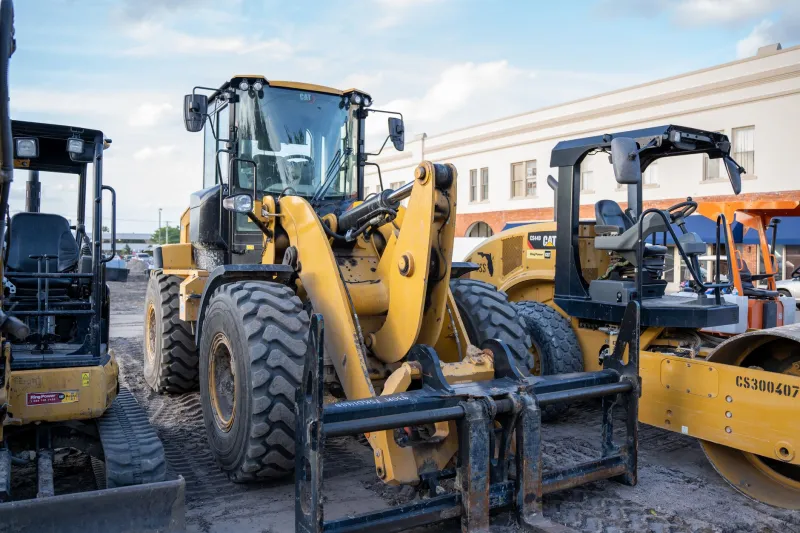
For many purchasing managers in American manufacturing and construction, the experience is familiar: you need a specific piece of heavy equipment or a critical replacement component, and there is precisely one authorized dealer within a two-hundred-mile radius willing to quote the job. The price is high. The lead time is long. And the dealer knows, as well as you do, that your alternatives are limited.
This is not an accident. It is, in many cases, the intended outcome of exclusive territorial distribution agreements — contractual arrangements between original equipment manufacturers and their dealer networks that divide the country into protected sales zones and restrict where authorized distributors may actively market, sell, or service equipment. For OEMs, these agreements offer predictable channel management and brand consistency. For the industrial buyers on the receiving end, they frequently mean reduced negotiating power, inflated acquisition costs, and a sourcing environment that rewards geography over merit.
How Territorial Exclusivity Actually Works
At their core, exclusive territorial agreements grant a single authorized dealer the right to represent a manufacturer's product line within a defined geographic boundary. In exchange, the dealer typically commits to minimum purchase volumes, investment in service infrastructure, and compliance with brand standards. The manufacturer, in turn, agrees not to appoint competing dealers within that territory and may restrict other dealers from actively soliciting customers across boundary lines.
The arrangement appears straightforward — and in theory, it is designed to ensure dealers invest adequately in local support without fearing cannibalization from neighboring outlets. In practice, however, the restrictions can extend well beyond passive marketing boundaries. Some agreements prohibit dealers from fulfilling unsolicited orders from outside their assigned territory. Others restrict the resale of used or refurbished equipment across regional lines. A number of contracts include provisions that effectively bar independent parts distributors from accessing the same supply chains that authorized dealers enjoy, creating a tiered market where OEM-aligned channels hold structural advantages that have nothing to do with service quality or technical expertise.
The Pricing Consequences for Industrial Buyers
When competition within a territory is structurally limited, pricing discipline weakens. Economic research on exclusive distribution arrangements consistently finds that geographic restrictions reduce the downward pressure on dealer margins that competitive bidding would otherwise generate. For heavy equipment — where individual transactions routinely reach six figures and multi-unit fleet acquisitions can run into the millions — even modest margin inflation compounds into substantial cost exposure over time.
Regional pricing disparities in heavy equipment markets are well-documented among procurement professionals, even if they rarely make headlines. Buyers in less densely served markets — rural manufacturing corridors, inland construction markets, regions with lower dealer density — routinely pay premiums that their counterparts in competitive metro markets do not. The equipment is identical. The manufacturer's cost structure is the same. The difference is the competitive environment the OEM's distribution architecture creates, or fails to create.
Parts and service pricing compounds the problem. Once a facility is committed to a particular equipment platform, ongoing parts procurement and warranty service typically flow through the same authorized channel. A dealer operating without meaningful local competition has limited incentive to sharpen pricing on consumables, scheduled maintenance contracts, or emergency service calls. Captive aftermarket revenue is, for many dealers, the most profitable segment of their business — and territorial protection is what makes it captive.
Legal Terrain: What the Courts and Regulators Have Said
Exclusive territorial agreements occupy a nuanced position in American antitrust law. The Supreme Court's 1977 ruling in Continental T.V., Inc. v. GTE Sylvania Inc. established that vertical non-price restraints — including territorial restrictions — are subject to the rule of reason rather than per se illegality. This means courts evaluate whether the competitive harm outweighs the legitimate business justifications, a standard that has generally favored manufacturers seeking to maintain orderly distribution networks.
However, the legal landscape is not uniformly permissive. The Federal Trade Commission and the Department of Justice have both signaled increased scrutiny of distribution arrangements that appear to foreclose independent competitors from viable market access. Several states have enacted equipment dealer protection statutes — particularly in the agricultural sector — that impose limits on manufacturers' ability to terminate dealers, restrict territories, or favor company-owned outlets over independent franchisees. The right-to-repair movement, which has gained significant legislative momentum at the state level, directly challenges the downstream effects of OEM channel control by seeking to guarantee independent service providers access to technical data and parts supply.
For industrial buyers, the practical implication is that the legal framework, while not eliminating exclusive arrangements, does create pressure points that experienced procurement teams can leverage.
Strategies for Buyers Operating in Constrained Markets
Accepting territorial pricing as an immovable condition of doing business is not the only option available to procurement teams. Several strategies have demonstrated effectiveness in recovering competitive leverage within OEM-constrained markets.
Cross-territorial solicitation remains a viable tool where dealer agreements permit unsolicited transactions across boundaries. Buyers who proactively contact dealers in adjacent territories — particularly for large fleet acquisitions — sometimes find that the volume justifies the administrative complexity of a cross-boundary sale, even when the local dealer holds nominal territorial preference.
Specification flexibility is among the most powerful negotiating instruments available. When procurement specifications are written broadly enough to accommodate competing equipment platforms, the threat of switching manufacturers is credible. OEM sales representatives, who typically operate at a national or regional level above the dealer tier, have strong incentives to ensure that territorial pricing practices do not drive fleet decisions toward competitors.
Independent distributors and the secondary market deserve serious evaluation for applications where new OEM equipment is not operationally required. The used and refurbished equipment market operates largely outside territorial exclusivity frameworks, and well-maintained second-hand iron sourced through reputable independent channels can deliver substantial cost reductions without sacrificing capability.
Consolidated purchasing through industry cooperatives or buying groups can aggregate demand across multiple buyers, creating volume leverage that individual facilities cannot generate independently. Several manufacturing trade associations have developed group purchasing programs specifically to counterbalance OEM channel concentration.
Direct engagement with OEM regional management — rather than accepting dealer quotes as final — is underutilized by many buyers. Manufacturers have reputational and competitive interests that extend beyond any single dealer's margin preference, and escalating pricing concerns through the manufacturer's own commercial hierarchy sometimes produces outcomes that dealer-level negotiation cannot.
A Market Structure Worth Watching
The distribution architecture governing heavy equipment in the United States is not static. Consolidation among dealer networks — larger regional groups absorbing independent outlets — is reshaping the competitive landscape in ways that may further concentrate market power within OEM-authorized channels. At the same time, the growth of direct-to-buyer digital platforms, the expansion of independent parts distribution, and increasing legislative attention to dealer and buyer rights are all exerting countervailing pressure.
For industrial buyers, the essential discipline is clarity about the structural forces at work in their sourcing environment. Territorial exclusivity is not simply a feature of how equipment happens to be distributed — it is a deliberate commercial strategy with measurable cost consequences. Procurement teams that understand the architecture are better positioned to navigate it.