Arbitrage in Iron: How Global Secondary Markets Are Repricing American Equipment—and What Domestic Buyers Can Do About It
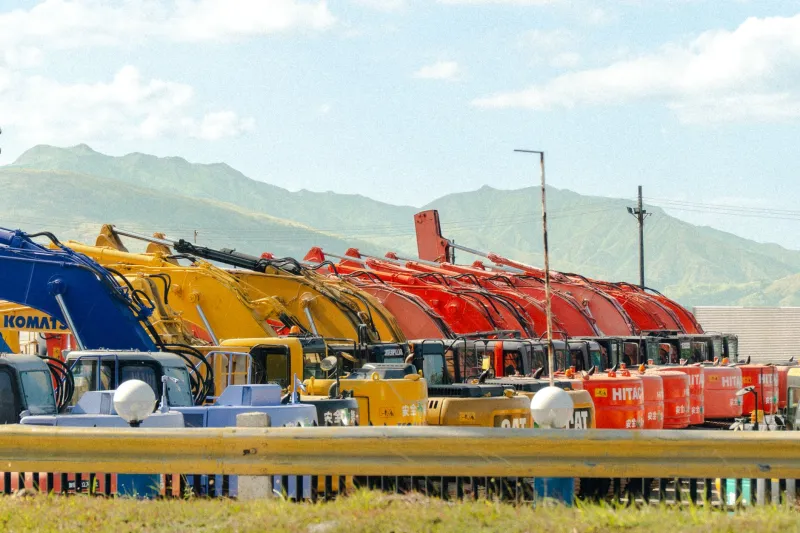
A well-maintained American crawler excavator sells at a regional auction in the Southeast for $195,000. Within weeks, it is loaded into a shipping container, bound for a buyer in Southeast Asia or the Middle East who will pay the equivalent of $230,000 to $260,000 after logistics, duties, and local reconditioning. The original seller left money on the table. The domestic buyer who wanted that machine was outbid by an exporter. And the gap between what the equipment fetched domestically and what it commanded internationally went to a middleman operating in the space between two pricing systems that don't communicate with each other.
This pattern is not an anomaly. It is a structural feature of the global used equipment market—one that is reshaping domestic pricing dynamics in ways that most American equipment buyers have not fully reckoned with.
Why American Equipment Travels
United States-manufactured and US-operated heavy equipment carries a specific set of attributes that make it attractive in global secondary markets. Maintenance standards in American industrial and construction operations are generally higher than in many export destination markets, producing used equipment with better-documented service histories. American equipment is typically operated within defined load and hour parameters, partly due to insurance requirements and partly due to the regulatory environment—resulting in machinery that arrives at the end of a project cycle in better-than-expected mechanical condition.
Brand recognition for major American and American-market equipment lines is strong in developing markets where infrastructure investment is accelerating. Buyers in West Africa, South Asia, and parts of Latin America actively seek specific makes and models that have proven themselves in demanding environments. The familiarity of the platform, combined with the availability of parts through established distribution networks, makes American-origin equipment a preferred choice over locally sourced alternatives.
Add to this the relative strength of the dollar against many export-market currencies over recent periods, and the economics of buying in the US and selling abroad become structurally favorable for well-capitalized exporters.
The Domestic Pricing Consequence
The influx of export-oriented buyers into domestic auction and dealer channels has a direct effect on domestic pricing. When a piece of equipment can support a higher price in an overseas market than in the domestic used market, export buyers will consistently outbid domestic end-users up to the point where the domestic price approaches the export-viable ceiling—minus logistics, duties, and margin.
This dynamic compresses the price advantage that domestic buyers have historically enjoyed in the secondary market. Equipment that a domestic manufacturer or contractor might have acquired at a meaningful discount to replacement cost is now trading closer to export parity. The practical result is that American industrial buyers are, in effect, competing with global demand for their own domestic surplus.
The effect is most pronounced in equipment categories with strong international demand: crawler tractors, motor graders, large wheel loaders, articulated dump trucks, and certain classes of cranes. It is less significant in highly specialized equipment configured for specific North American regulatory or operational requirements that do not translate well to international markets.
Tariffs, Logistics, and the Structural Friction
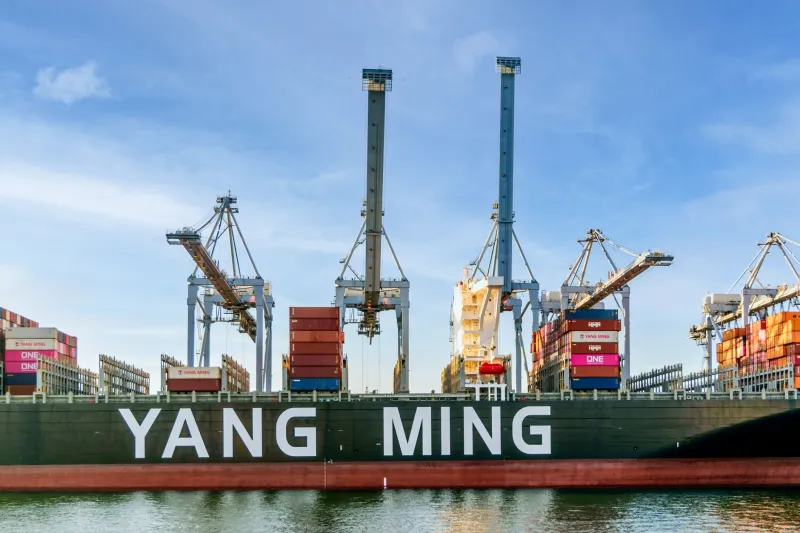
The arbitrage opportunity persists because it is not frictionless. Export logistics for heavy equipment are operationally intensive. Machines must be cleaned to meet phytosanitary requirements in destination countries, drained of fluids for transport, loaded onto flat-rack or open-top containers, and shipped through ports that handle oversized cargo. Transit times typically run four to ten weeks depending on destination.
Import duties in destination markets vary widely. Some countries apply nominal tariffs to used equipment to encourage infrastructure development; others impose rates that can reach 15 to 25 percent of declared value. The exporter must understand the duty structure of each target market to calculate the viable acquisition price domestically.
Regulatory barriers present additional complexity. Emission standards in some export destinations are less stringent than US Tier 4 Final requirements, which means older Tier 2 and Tier 3 machines that would face operational restrictions in certain US applications actually carry a premium in markets where those standards don't apply. This creates a specific segment of the American used market—older, lower-emission-tier equipment—where export demand is particularly active.
How Domestic Buyers Can Respond
Understanding the mechanics of this dynamic is the first step toward navigating it more effectively. Several practical strategies are available to domestic buyers who find themselves consistently losing equipment to export channels.
Expand sourcing geography. Domestic buyers who restrict their purchasing to local or regional auctions are competing in the markets most accessible to export buyers, who concentrate their sourcing at high-volume auction events. Broadening the search to include dealer inventories, private sales, and smaller regional auctions in markets with less export-buyer penetration can surface opportunities at prices that reflect local rather than global demand.
Move earlier in the equipment lifecycle. Export buyers typically target equipment in the 5,000- to 12,000-hour range—used enough to be priced below new, but fresh enough to survive a long ocean voyage and several more years of service. Domestic buyers willing to acquire equipment at lower hours—before it enters the export-attractive window—can often secure better pricing relative to remaining service life.
Leverage the reverse flow. The same global pricing differential that sends American equipment abroad also creates opportunities for domestic buyers to source equipment from international markets where pricing dynamics favor the American buyer. Equipment sold into certain markets during periods of strong dollar-to-local-currency ratios can sometimes be repatriated at favorable prices when exchange rates shift. This is a more complex transaction that requires understanding import duties, inspection requirements, and reconditioning costs—but for buyers with the operational sophistication to execute it, the economics can be compelling.
Build relationships with exporters. Some equipment export operators are willing to pass on machines that don't meet their export criteria—wrong configuration, minor damage that affects cosmetics but not function, documentation gaps—at prices that reflect the discount from export-viable condition. For domestic buyers with in-house reconditioning capability, these units can represent genuine value.
The Bigger Picture
The globalization of the used heavy equipment market is not a temporary phenomenon. As infrastructure investment accelerates in developing economies and as the dollar-denominated value of American-origin equipment remains elevated by global standards, the structural incentive for export arbitrage will persist.
Domestic buyers who treat the used equipment market as a purely local transaction are operating with an incomplete picture of the pricing forces they are navigating. Building awareness of global demand patterns, export buyer behavior, and the friction costs that define the arbitrage window is increasingly essential knowledge for any procurement professional responsible for acquiring heavy equipment in the American market.