The Idle Drain: Calculating What Dormant Equipment Is Actually Costing Your Operation
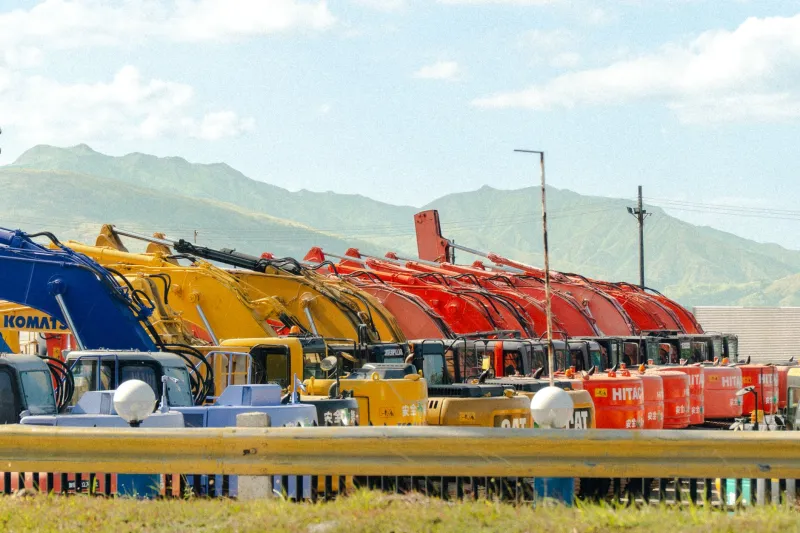
The machine at the back of the yard has been sitting for fourteen months. Nobody ordered it removed. Nobody authorized its continued presence. It simply accumulated—a casualty of a completed project, a redundant acquisition, or a capacity plan that never materialized. And every month it sits, it is quietly extracting money from the operation.
This is not an unusual situation. Across American manufacturing and construction, idle heavy equipment represents one of the most consistently underestimated line items in the asset ledger. The costs are dispersed across multiple budget categories, which is precisely why they remain invisible until someone takes the time to consolidate them.
What Dormant Equipment Actually Costs
The financial drag from idle machinery operates across at least five distinct cost categories, each of which tends to be managed—or ignored—in isolation.
Depreciation without utilization. Heavy equipment depreciates whether it operates or not. A machine sitting in a storage yard is losing book value on the same schedule as one working a full shift. For assets financed with debt, this creates an accelerating equity erosion problem: the loan balance declines slowly while the asset's market value falls with it, compressing the owner's position. For assets carried on the balance sheet at historical cost, the depreciation charge continues regardless of productive output.
Financing burden. Any equipment acquired with borrowed capital carries a monthly interest charge that is indifferent to utilization. An excavator financed at current commercial equipment loan rates and sitting idle for two years will accumulate interest costs that can represent 8 to 15 percent of its original acquisition price, depending on the loan structure. That is a direct cash outflow producing zero return.
Insurance and registration. Most equipment insurance policies do not offer meaningful premium relief for idle assets. Operators and risk managers frequently discover that the cost to maintain minimum coverage on dormant equipment—protecting against theft, vandalism, weather damage, and liability—runs 1.5 to 3 percent of insured value annually. On a $300,000 machine, that is $4,500 to $9,000 per year for coverage on an asset generating no revenue.
Storage and physical maintenance. Outdoor storage extracts its own toll. Exposed hydraulic cylinders corrode. Electrical connections oxidize. Fuel systems develop microbial contamination. Rubber components harden and crack. Tires develop flat spots or sidewall deterioration. The cost of periodic maintenance on idle equipment—fluid changes, corrosion prevention, battery maintenance, tire pressure monitoring—adds up. For equipment stored indoors, the facility cost per square foot must be allocated against the asset.
Opportunity cost. The most significant and least-discussed element is the capital that remains locked in a non-productive asset. That capital could be redeployed into productive equipment, applied against debt, or invested in facility improvements. The opportunity cost is real even when it doesn't appear on an invoice.
Building the True Carrying Cost Model
Consolidating these categories into a single annual carrying cost figure is the essential first step toward a rational disposition decision. The model is not complicated, but it requires pulling data from finance, operations, risk management, and facilities—which is why it rarely gets built.
For a representative example: a mid-size wheel loader with a current market value of $180,000, financed with a remaining balance of $120,000 at 6.5 percent interest, insured for $180,000 at a 2 percent annual premium, stored outdoors with estimated annual maintenance of $3,500, and carried on the balance sheet with an annual depreciation charge of $18,000, generates a total annual carrying cost of approximately $34,000 to $38,000—before opportunity cost is factored in.
That figure often surprises asset managers who have been treating the idle machine as a neutral item on the books.
The Disposition Framework
Once the true carrying cost is established, the disposition decision becomes a structured financial exercise rather than an operational afterthought. There are four primary paths, each appropriate under different conditions.
Redeploy within the operation. If the equipment is idle because of project completion or temporary demand reduction—rather than permanent obsolescence—internal redeployment may be the highest-value option. This requires an honest assessment of near-term project pipeline and a willingness to move equipment between sites or divisions rather than allowing it to accumulate in a single yard.
Retrofit for a different application. Some idle equipment can be economically adapted for a different operational role. A crane that has exceeded the reach requirements of its original application may serve effectively in a different configuration. A generator set that has been superseded by a larger unit may be repurposed as a backup or sold to a smaller operation where its capacity is appropriate. The retrofit path requires a cost-benefit analysis, but it can recover significant value from assets that would otherwise sit or be liquidated at a discount.
Sell through appropriate channels. Equipment in serviceable condition with documented maintenance history can typically be sold through dealer networks, auction platforms, or direct-to-buyer channels. The critical variable is timing. Equipment sold proactively—before extended storage has degraded its condition and before market conditions shift—consistently commands better prices than equipment sold under pressure. Waiting tends to convert a recoverable situation into a distressed one.
Liquidate. For equipment that is mechanically compromised, obsolete relative to current regulatory requirements, or simply too old to attract a reasonable buyer, liquidation—through auction, parts recovery, or scrap—may be the most rational option. Accepting a below-book recovery is preferable to continuing to absorb carrying costs on an asset with no realistic path to productive use.
The Inventory Audit as a Starting Point
For operations that have not conducted a formal idle equipment audit, the first step is simple: identify every asset in the fleet that has generated fewer than a threshold number of operating hours in the past twelve months. Define that threshold based on your equipment type and operational context—for most categories, anything below 20 to 25 percent of rated annual utilization warrants scrutiny.
For each asset below the threshold, build the carrying cost model described above and assign a disposition category. The exercise typically takes a few weeks for a mid-size fleet and consistently surfaces financial exposure that was not previously visible in any single budget report.
The Broader Pattern
Idle equipment accumulation is not a sign of poor management in isolation. It is a predictable consequence of the way heavy equipment procurement decisions are made—often under project pressure, often with optimistic assumptions about future utilization, and often without a formal process for reassessing assets when the conditions that justified their acquisition change.
What separates high-performing equipment operations from those quietly bleeding capital is not the absence of idle assets—it is the discipline to find them, measure them honestly, and act on the numbers before the carrying costs compound into a significant loss.