Riding the Volatility: Procurement Strategies for Managing Heavy Equipment Supply Chain Uncertainty
The past several years have provided American industrial buyers with an accelerated education in supply chain fragility. Semiconductor shortages grounded new equipment production lines. Shipping disruptions turned routine parts orders into months-long waiting exercises. Then, almost without notice, conditions reversed in certain segments — dealer lots filled, lead times compressed, and buyers who had over-ordered during the shortage found themselves managing excess inventory at a moment when financing costs were climbing sharply.
This whipsaw pattern is not an anomaly. It reflects structural characteristics of the heavy equipment supply chain that have been present for decades, periodically amplified by macroeconomic shocks, geopolitical events, or shifts in domestic construction and manufacturing activity. The buyers who navigate these cycles most effectively are not those who predict them with precision — no one does — but those who build procurement architectures resilient enough to absorb the swings without catastrophic exposure in either direction.
Understanding the Structural Drivers of Volatility
Heavy equipment procurement cycles are inherently lumpy. Capital equipment purchases are deferrable in ways that consumable inputs are not, which means demand tends to cluster during periods of economic confidence and collapse sharply during downturns. This concentration of demand creates feast-or-famine conditions for manufacturers and distributors that take years to resolve through production adjustments.
The parts supply chain carries its own distinct volatility profile. Many critical components — hydraulic control valves, electronic control modules, specialized bearing assemblies — are sourced from a limited number of global manufacturers. When a single production facility in Southeast Asia or Central Europe encounters disruption, the downstream effect on American equipment operators can be severe and immediate, with no domestic alternative available at scale.
Geopolitical dynamics add another layer of unpredictability. Tariff adjustments, export controls on raw materials, and shifting trade relationships between the United States and its major trading partners have introduced cost and availability variables that were largely absent from procurement planning models a decade ago.
The Inventory Paradox: Balancing Stockpile Risk Against Availability Risk
The intuitive response to parts shortages is to build inventory buffers. The intuitive response to surplus conditions is to defer purchasing and negotiate aggressively on price. Both instincts are reasonable in isolation. In combination, they often produce the opposite of the intended outcome.
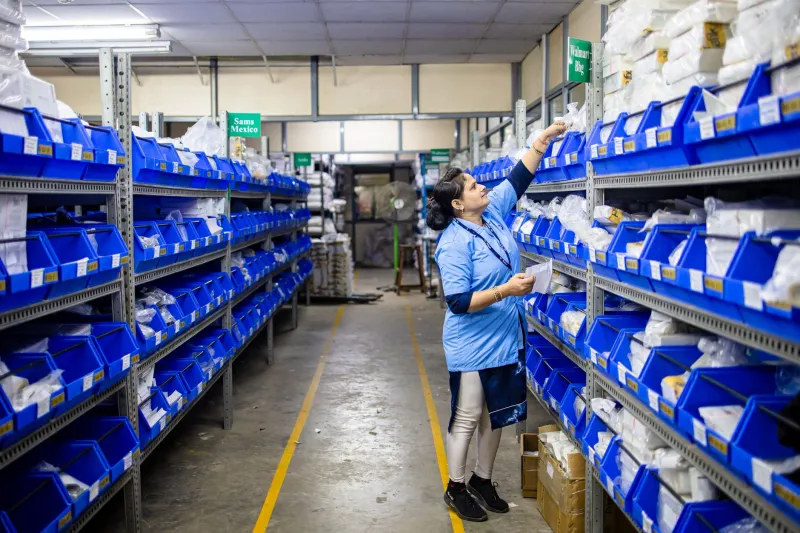
Organizations that expanded parts inventories aggressively during the shortage period of 2021 and 2022 frequently found themselves holding excess stock at inflated prices when conditions normalized. The carrying costs — warehouse space, capital tied up in inventory, obsolescence risk for electronically managed components with firmware dependencies — eroded the operational security the buffer was intended to provide.
A more sophisticated approach involves stratifying the parts inventory by criticality and lead time sensitivity. Components that are critical to machine uptime, difficult to source on short notice, and relatively stable in price and specification are strong candidates for safety stock investment. Components that are readily available through multiple channels, subject to rapid specification changes, or high in unit cost relative to their consumption rate warrant a leaner stocking posture.
This stratification exercise requires current data on actual consumption rates, documented lead times from primary and secondary suppliers, and honest assessment of the operational consequence of a stockout event for each component category.
Supplier Relationship Architecture: Beyond the Single-Source Default
Many American equipment operators default to single-source procurement relationships — one preferred dealer for equipment, one primary distributor for parts — in exchange for volume pricing and service priority. This arrangement delivers real value during stable conditions and becomes a significant liability during periods of supply disruption.
Building a deliberate multi-supplier architecture does not require abandoning primary relationships. It requires cultivating qualified secondary sources for the component categories that represent the greatest operational risk. This means identifying regional distributors with demonstrated inventory depth in critical part families, establishing account relationships before they are urgently needed, and periodically placing test orders to validate lead times and service quality.
For equipment procurement specifically, maintaining active relationships with two or three dealers — including independent regional distributors who may offer greater flexibility on allocation priority during tight markets — provides negotiating leverage and supply optionality that a single-source arrangement cannot.
Contract Structures That Buffer Against Price Spikes
Spot purchasing exposes buyers to full price volatility. Blanket purchase orders with fixed pricing over a defined contract period transfer price risk to the supplier — a transfer suppliers will resist during shortage conditions and accept more readily during periods of excess inventory. The timing of contract negotiations therefore matters as much as the terms themselves.
Several contract provisions deserve particular attention in volatile supply environments:
Price escalation caps. Contracts should specify the maximum percentage by which pricing can increase over the contract term, tied to a defined index such as the Producer Price Index for metals or the BLS machinery components index, rather than leaving escalation to supplier discretion.
Allocation guarantees. During shortage periods, suppliers prioritize their highest-volume and longest-standing customers. Contracts that include explicit allocation commitments — specifying minimum quantities the supplier will fulfill regardless of broader market conditions — provide meaningful protection.
Lead time performance clauses. Defining acceptable lead time ranges and establishing remedies for non-performance — credits, expedite fee coverage, or release to purchase from alternative sources without penalty — creates accountability that informal relationships do not.
Timing the Market: Procurement Strategy Across the Demand Cycle
While precise cycle timing is not achievable, broad demand patterns in the heavy equipment market follow recognizable rhythms. Construction equipment demand typically softens in the fourth quarter as project activity slows ahead of winter in northern regions. Mining equipment procurement often tracks commodity price cycles with a six-to-twelve-month lag. Manufacturing equipment investment tends to lead broader industrial production indices.
Buyers who align major procurement decisions with these patterns — initiating equipment purchases during seasonal demand troughs, negotiating parts contracts when distributor inventories are elevated, and accelerating planned replacements ahead of anticipated demand surges — consistently achieve better pricing and lead time outcomes than those who purchase on a reactive, need-driven basis.
This requires maintaining a rolling 18-to-24-month procurement forecast that is reviewed quarterly against current market conditions, rather than treating equipment and parts purchasing as a series of isolated transactions.
Building Institutional Resilience
The organizations that have demonstrated the greatest resilience through recent supply chain disruptions share several characteristics: documented supplier alternatives for critical components, inventory strategies grounded in consumption data rather than anxiety, contract structures that provide price and allocation protection, and procurement timing that reflects market cycle awareness rather than pure operational urgency.
None of these capabilities is exotic or expensive to develop. They require disciplined process, consistent data collection, and the organizational patience to build supplier relationships before they are desperately needed. In a supply chain environment that has demonstrated its capacity to shift from scarcity to surplus and back again within a single fiscal year, that resilience is not optional infrastructure. It is a fundamental operating requirement.